

common booklouse
- noun
- /ˈkɑːmən ˈbʊklaʊs/
- The common booklouse thrives in damp, humid environments such as basements and old libraries.
Examples
-
If you spot a common booklouse in your books, it's a sign the area may be too moist.
-
Homeowners are often surprised to discover that the common booklouse can cause minor damage to wallpaper and stored papers.
-
The common booklouse thrives in humid environments.
-
I found a common booklouse in the old library.
-
Homeowners are often surprised to discover that the common booklouse can cause minor damage to wallpaper and stored papers.
-
If you spot a common booklouse in your books, it's a sign the area may be too moist.
-
The common booklouse thrives in damp, humid environments such as basements and old libraries.
Synonyms

A very small insect that has no wings and eats mold on books and paper and can damage them

A small wingless insect that lives in old books, stored food, and damp places

A group of very small insects like booklice that live on books or bark
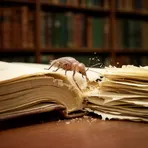
A small wingless insect that eats and damages books and papers

A small silver-grey insect without wings that eats glue in books and starchy things

A very small insect that eats and damages books and papers
Surface Forms
Morphology
This is a straightforward adjectival modification: 'common' (typical, frequent) simply qualifies the noun 'booklouse' (a small insect that damages books). If a B1 learner knows both constituent words, the combined meaning is immediately compositional and predictable across languages, so no idiomatic or metaphorical shift blocks understanding.
Etymology
Common booklouse gets its name from a simple image: tiny insects living in old, damp books and nibbling the glue, pages and mold. The word louse shows it is a small 'pest', so the name explains why it means a little insect found in damp places that eats mold and book materials.

