

Liposcelis divinatorius
- noun
- Specialized
- Old libraries often struggle with infestations of Liposcelis divinatorius, which can damage valuable manuscripts.
Examples
-
Proper humidity control helps prevent Liposcelis divinatorius from thriving among archived documents.
-
Conservators discovered traces of Liposcelis divinatorius among the pages of the rare collection.
-
Look out for Liposcelis divinatorius!
-
I found a Liposcelis divinatorius in my old book!
-
Conservators discovered traces of Liposcelis divinatorius among the pages of the rare collection.
-
Old libraries often struggle with infestations of Liposcelis divinatorius, which can damage valuable manuscripts.
-
Proper humidity control helps prevent Liposcelis divinatorius from thriving among archived documents.
Synonyms
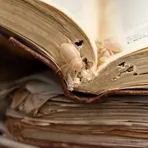
A very small insect without wings that eats and damages old books and papers
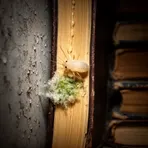
A small insect that lives in damp indoor places and eats mold and book glue

A very small insect like a book louse often found near books and stored food
Surface Forms
Morphology
Liposcelis + divinatorius
This is a Latin binomial: while 'Liposcelis' names a genus of booklice, 'divinatorius' is not an English word (not found in the dictionary) and provides no transparent cue to the insect's properties. Species epithets are often arbitrary Latin descriptors, so a B1 learner who knows the listed constituents would not be able to derive the meaning of the full name from them.
Etymology
Liposcelis divinatorius may come from a Latin word for a 'diviner' or finder, because people often discovered this tiny insect hiding deep in books and old papers. That's why the name fits: the small, wingless booklouse seems to 'search out' pages and can damage manuscripts.

