
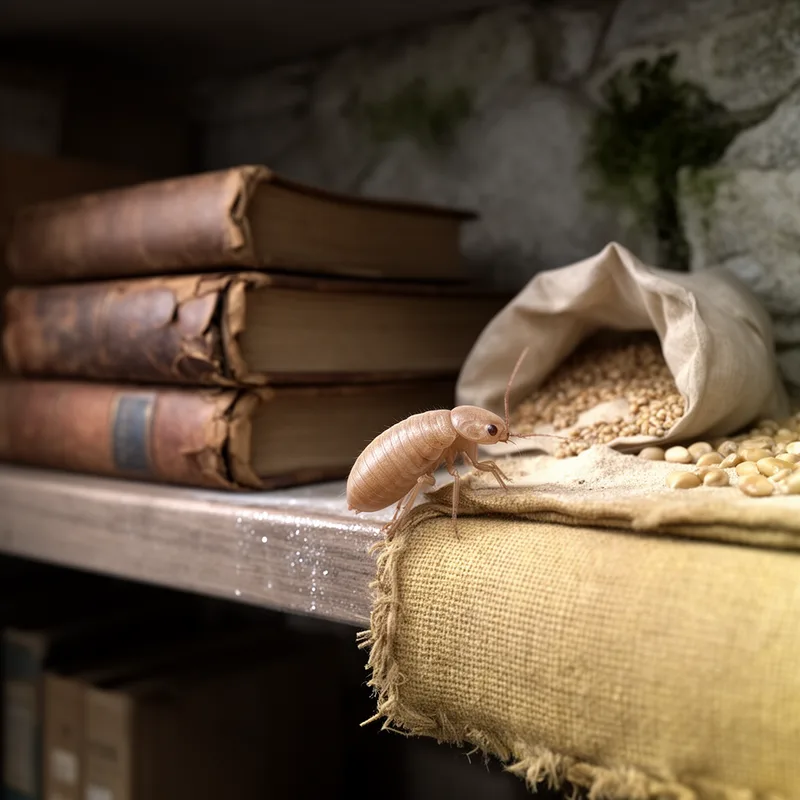
Trogium pulsatorium
- noun
- Specialized
- The archives were infested with Trogium pulsatorium, causing damage to the delicate old manuscripts.
Examples
-
Many old books contain Trogium pulsatorium.
-
Proper humidity control can help prevent outbreaks of Trogium pulsatorium in libraries.
-
Researchers studied the habitat preferences of Trogium pulsatorium in museum collections.
-
The Trogium pulsatorium is often found in libraries.
-
Proper humidity control can help prevent outbreaks of Trogium pulsatorium in libraries.
-
Researchers studied the habitat preferences of Trogium pulsatorium in museum collections.
-
The archives were infested with Trogium pulsatorium, causing damage to the delicate old manuscripts.
Synonyms
A very small insect without wings that eats and damages old books and papers
A small insect that lives in damp indoor places and eats mold and book glue

A very small insect that has no wings and eats mold on books and paper and can damage them
Surface Forms
Morphology
Trogium + pulsatorium
This is a Latin scientific binomial (a proper taxonomic name) rather than a compositional English phrase; its reference to the common insect 'booklouse' cannot be derived from the parts, especially since 'pulsatorium' is not an English lexical item. Species names are essentially arbitrary labels or based on Latin/Greek roots that are not transparent to a B1 learner, so the meaning is not predictable from the constituents.
Etymology
Trogium pulsatorium may come from old words meaning Trogium 'to nibble' and pulsatorium 'to tap', which creates the picture of tiny nibblers moving inside books. These small wingless insects are often found in old books, stored food, and damp places, so the name helps you remember they chew paper and glue.

