
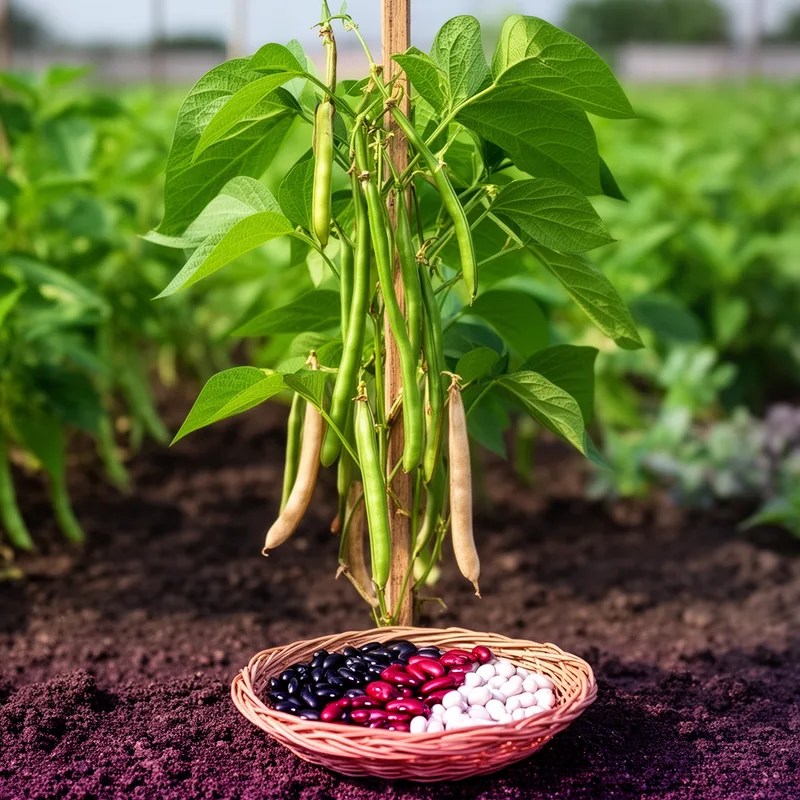
common bean
- noun
- /ˈkɑːmən biːn/
- Provider also had resistance to the common bean mosaic virus and others, including the pod mottle virus, and to powdery mildew.
- common bean rust
Examples
-
The common bean (Phaseolus vulgaris) is the principal source of protein in the diet of the poor in Latin America.
Academic text (1993) -
"So it occurred to me that I should look for ASR resistance genes in common bean cultivars."
Academic text (2006) -
The genes need to be characterized and studied before they can be used to make common beans resistant to the ASR pathogen.
Academic text (2006) -
The team selected 24 breeding lines, or genotypes, of common bean seeds from the CIAT bean seed bank.
Academic text (1999) -
The moisture content of red kidney bean seeds is comparable to the values (8.9%) reported by Olaofe et al. (2010) for common beans.
Academic text (2014) -
These efforts, combined with Pastor-Corrales's pyramiding techniques, will help protect America's soybean and common bean industries from potentially devastating diseases.
Academic text (2006) -
These findings are in accordance with Costa et al. (2006) who observed crude fiber content of 6.26-8.98% in pea, chickpea, and common beans.
Academic text (2014) -
In April 2005, Pastor-Corrales added a new goal to his project: to identify and use genes from common beans to help control Asian soybean rust (ASR).
Academic text (2006) -
The common bean is a popular ingredient in many vegetarian recipes.
-
In her garden, she grows various plants, including common beans and tomatoes.
Synonyms

 512
1.0
512
1.0

An edible seed or pod from plants like peas and lentils used for food
 3
2.0
3
2.0
A large red seed shaped like a kidney that people cook and eat or the plant that grows it


 1
2.1
1
2.1
A long thin green vegetable that people eat cooked or raw
 1
1.4
1
1.4
A plant that produces beans you can eat

A bean plant grown worldwide for its edible pods and seeds

A climbing or bushy vegetable that produces edible beans

A seed from plants like peas or lentils that you can eat
Surface Forms
Morphology
The meaning 'a bean that is common or typical' is directly and transparently derived from combining 'common' (typical/frequent) with 'bean' (edible seed/plant). This compositional label follows normal noun modification patterns and is cross-linguistically paralleled, so a B1 learner who knows the parts will readily understand it.
Etymology
Common bean got its name because people in many places planted and ate this ordinary bean. The word common means 'ordinary' and bean is the seed people eat, so the name tells you it is a widely grown food plant.