

commissure
 1
9.9
1
9.9

- noun
- /ˌkɒmɪˈʃʊr/
- Specialized
 :
comisura
:
comisura
- The commissures, in contrast to the semi-lunar valves, do not extend completely to the annulus and are supported by commissural chordae.
- posterior commissure
- anterior commissure
Examples
-
Actually, it's the best way to identify the interior labial commissure.
-
The commissure plays a vital role in coordinating sensory information across the brain's hemispheres.
-
Can you please identify the interior labia commissures?
-
The anterior commissure is a structure of nerve cells connecting the left and right hemispheres.
Academic text (1995) -
So you do a split brain operation, meaning cut the commissures, cut the optic chiasm.
-
You can't locate the interior labial commissure from the backside.
-
One specific area of the brain—the anterior commissure—was reported to be 34% larger in homosexual males (Allen & Gotski, 1992).
Academic text (1995) -
The commissure connects the left and right sides of the brain, allowing communication between them.
-
Surgeons often cut the commissure during procedures to control severe epilepsy.
Synonyms
 4
7.9
4
7.9
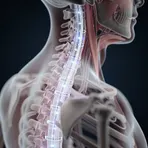
A bundle of nerve fibers in the brain or spinal cord that carry signals
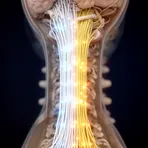
A group of nerve fibers in the brain or spinal cord that carry messages
Surface Forms
Etymology
Commissure comes from the Latin prefix com- ('together') and a root meaning 'to join', so it originally meant a place where two things are joined. That's why in anatomy a commissure is a bundle of nerves that connects the two sides of the brain or spinal cord.