

tract
 4
7.9
4
7.9

- noun
- /trækt/
- Specialized
- The corticospinal tract carries signals from the brain to the spinal cord.
- white matter tracts
- optic tract
- tegmental tract
Loading YouTube…
Watch on YouTubeSo we, we sort of limited our search space to really thick tracts, really thick fibres.
- So we, we sort of limited our search space to really thick tracts, really thick fibres.
- And we can identify specific fiber tracts that way.
Examples
-
But also some studies using FM RMRI showed that they have defects in white matter tracts in anterior parts of the brain.
-
Quite simply, we sever the nerves within the spino-thalamic tract.
-
In the central nervous system, we call them a tract or we give them some other name.
-
And we can identify specific fiber tracts that way.
-
And we would, for example, see the tracts connecting the left and the right hemisphere.
-
The question is: "What are the pyramidal tracts?"
-
Tumors of the sinonasal tract constitute 3% of all head and neck malignancies.
Academic text (2009) -
Exposure to dust and particulate matter resulted in numerous complaints of both upper and lower aerodigestive tract irritation.
Academic text (2009) -
In addition to the prefrontal cortex, white matter tracts as well as subcortical brain structures are crucial for optimal executive function.
Academic text (2014) -
Histopathology of the specimen revealed a branchial fistula tract lined with pseudostratified columnar epithelium.
Academic text (2009)
Synonyms
 56
6.3
56
6.3
A route in the brain that carries nerve signals
 1
5.7
1
5.7
A part of the nervous system that carries signals, like a nerve or brain area
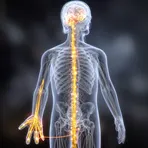

 1
5.3
1
5.3
A group of long cells that carry signals between body parts and the brain
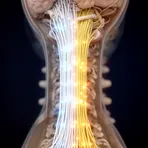
A group of nerve fibers in the brain or spinal cord that carry messages

A group of nerve fibers in the body that connect parts of the brain and spinal cord

A group of thin nerve threads that carry signals in the body
Compounds


- Specialized
11
3.4
A long tube made of muscle from the mouth to the anus that breaks down food and removes waste

- Specialized
8
3.7
A sickness in the parts that make and hold urine, like the kidneys or bladder, caused by germs


- Specialized
3
3.9
A tube in the body from the mouth to the anus where food is digested and waste leaves the body
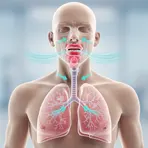
- Specialized
3
3.4
Parts of the body, like the nose and throat, that carry air to and from the lungs


- Specialized
2
4.2
The tube in the body from the mouth to the anus that breaks down food and removes waste


- Specialized
1
4.1
A sickness of the parts used for breathing, like the nose and lungs, that causes cough and breathing problems

- Specialized
1
7.6
A bundle of nerve fibers that carries movement signals from the brain to the spinal cord

- Specialized
1
4.1
Part of the breathing system that includes the lungs and big air tubes

- Specialized
1
4.1
The part of the breathing system that includes the nose, throat, and windpipe

- Specialized
A tube in the body from the mouth to the anus that carries food and breaks it down

- Specialized
A sample of cells taken from part of the digestive tract to check for diseases like cancer

- Specialized
A sample from the lungs placed on a slide to look for infection or cancer

- Specialized
Bundles of nerves from the brain to the spinal cord that control movements you choose

- Specialized
Nerve fibers in the brain that carry signals from the eye to the visual area
How Thick

Surface Forms
Etymology
Tract (a bundle of nerve fibers) comes from Latin tractus meaning 'a path' or 'drawing out'; a helpful way to remember it is to think of a nerve tract as a 'track' inside the body that carries messages like a road for signals.