

nerve tract
- noun
- /nɜrv trækt/
- Specialized
- The nerve tract carries signals from the brain to the muscles.
Examples
-
The surgeon repaired the damaged nerve tract to restore proper communication within the spinal cord.
-
Scientists discovered a new nerve tract in the spinal cord.
-
Damage to the nerve tract can lead to loss of movement or sensation below the injury site.
-
Researchers are studying how the visual nerve tract processes information from the eyes to the brain.
-
The patient suffered an injury that affected the spinal nerve tract responsible for motor control.
-
Researchers study how the different nerve tracts in the brain affect behavior and movement.
-
Injury to the nerve tract can lead to loss of sensation in the affected areas of the body.
Synonyms

 56
6.3
56
6.3

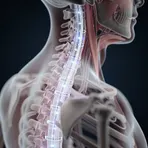
A route in the brain that carries nerve signals
 4
7.9
4
7.9
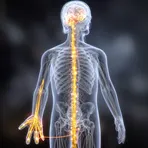
A bundle of nerve fibers in the brain or spinal cord that carry signals

 1
5.3
1
5.3
A group of long cells that carry signals between body parts and the brain

A group of nerve fibers in the body that connect parts of the brain and spinal cord

A group of thin nerve threads that carry signals in the body
How Big
- Specialized
81
2.8

- Specialized
- Specialized
4
3.4
- Specialized
5
7.0
Surface Forms
Morphology
The meaning is directly compositional: 'nerve' (bundle of nerve fibers) combined with 'tract' (a pathway) naturally yields 'a pathway of nerve fibers,' so a learner who knows both words can infer the MWE meaning. Although the term is technical, its structure follows normal noun–noun compounding and similar formations exist cross-linguistically, making it transparent to B1 learners who know the constituents.
Etymology
Nerve tract paints a simple picture: many thin nerve fibers traveling together along a single tract, a 'path' for signals. That's why it means a bundle of nerve fibers that run together in the brain or spinal cord.