
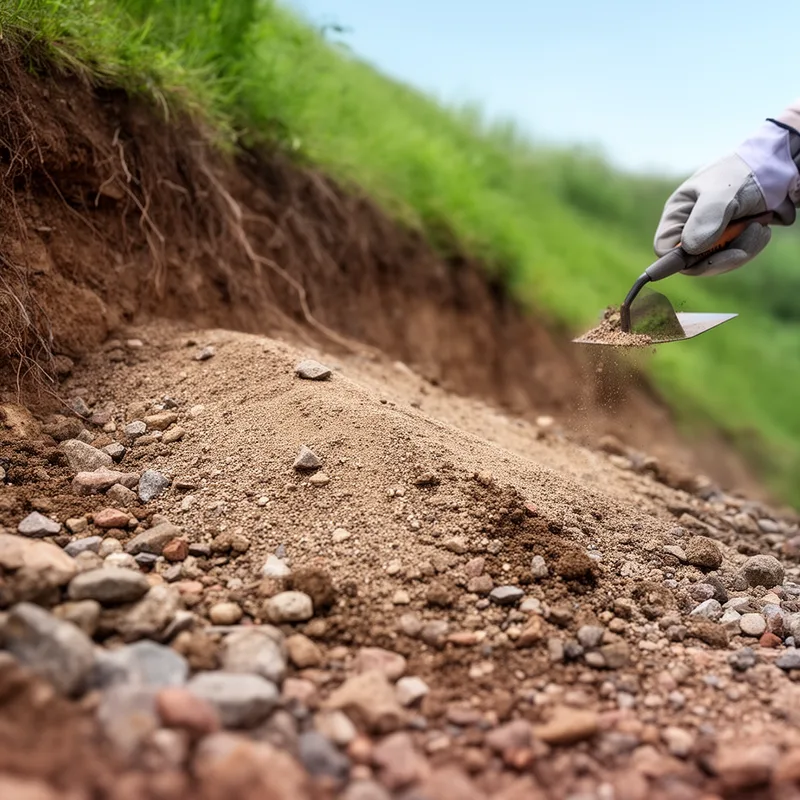
colluvium
- noun
- /kəˈlʌv.i.əm/
- Specialized
- The gardener discovered rich colluvium at the base of the hill, perfect for planting vegetables.
Examples
-
During the hike, we noticed that the colluvium collected at the foot of the cliffs was composed of various stones and sand.
-
Even now, these areas are mostly barren lithosols amid which granitic outcrops emerge continually, so that only in a few places does semiorganic colluvium accumulate.
Academic text (1994) -
After heavy rains, the colluvium near the slopes helped to improve the soil quality for the crops.
Synonyms

 407
1.0

Top layer of the ground made of soil and small rocks
 336
1.0
Top layer of the ground where plants grow
 1
9.3
A slope of loose rocks at the bottom of a cliff

Loose soil and rock carried by water down a slope and left at the bottom
Surface Forms
Etymology
Colluvium comes from Latin parts like col- 'together' and a root meaning 'to wash', and it is like alluvium (soil washed by rivers). So colluvium is the loose soil, sand, and rock that is washed or dropped down a slope and gathers together at the base of a hill.