
defluvium
- noun
- /dɪˈfluːviəm/
- Specialized
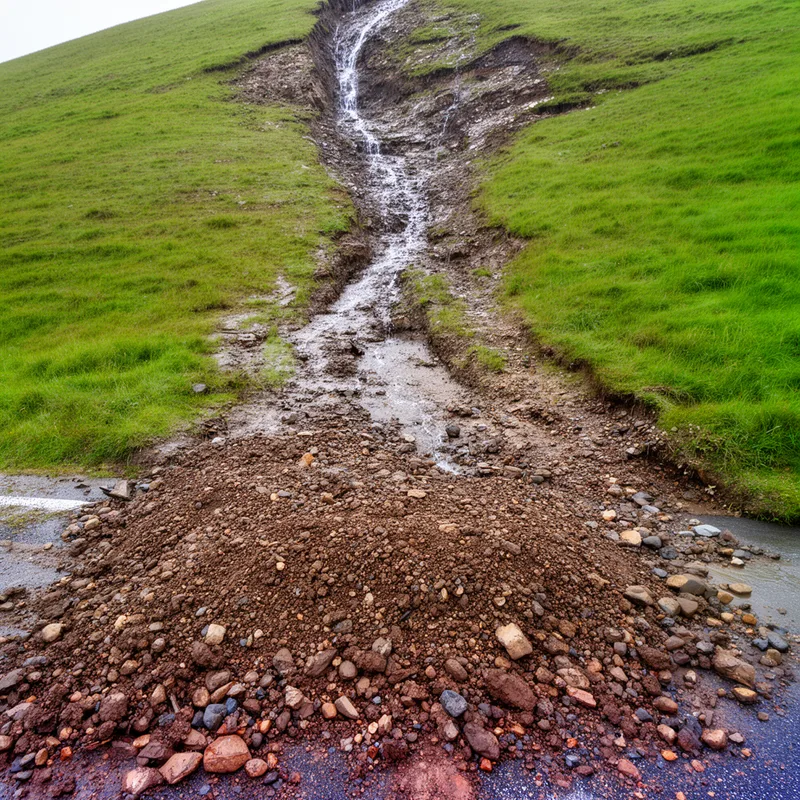
- Heavy rains caused defluvium to accumulate at the base of the mountain, blocking the road.
Examples
-
The geologist collected samples of defluvium to study the effects of erosion on the hillside.
-
After the storm, a thick layer of defluvium covered the lower fields near the river.
-
The defluvium from the hillside caused a blockage in the river.
-
Heavy rains often lead to significant defluvia in the area.
-
After the storm, a thick layer of defluvium covered the lower fields near the river.
-
The geologist collected samples of defluvium to study how much soil was washed down the hillside.
-
Heavy rains caused defluvium to gather at the base of the mountain, creating a hazard for drivers.
Synonyms

 68
3.5

A layer of sand or minerals that nature leaves over time
 41
4.2
Small bits that collect at the bottom of water or other liquids
 9
8.2
Loose bits of waste and broken things left after damage or natural events

Loose soil, sand, and small rocks that gather at the base of a slope
How Much

Surface Forms
Morphology
defluvium = de + fluv + ium
The form reflects Latin de- + fluv- + -ium, but these elements are not obvious productive English morphemes for most learners, so the geological sense cannot be predicted from common English components.
Etymology
The word defluvium comes from the Latin parts de- ('down' or 'away') and fluere ('to flow'). So, imagine water carrying loose soil and rock 'down' a slope — defluvium is the name for the material left by that flow after rain.