

cohune palm
- noun
- /koʊˈhuːn pɑːlm/
- US
- The oil extracted from the cohune palm is used both for cooking and in cosmetics.
Examples
-
Artisans carve the nuts of the cohune palm to make decorative buttons and jewelry.
-
The cohune palm is commonly found in the rainforests of Central America.
-
The cohune palm grows tall in tropical climates.
-
Many cohune palms can be found in Central America.
-
The cohune palm produces large nuts that are a source of valuable oil.
-
Artisans carve the nuts of the cohune palm to make decorative buttons and jewelry.
-
The cohune palm is commonly found in the rainforests of Central America.
Synonyms

 116
1.8
116
1.8

A tall tropical tree with one trunk and large fan-shaped leaves
 46
1.0
46
1.0
A tall tree with one straight trunk and big leaves at the top

A tropical palm tree whose large nuts make oil and vegetable ivory used for carving
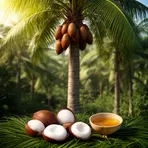
A tropical American palm tree whose large nuts produce oil and a hard white material like ivory
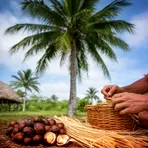
A tropical palm tree that produces edible nuts and strong fiber
Surface Forms
Morphology
The compound is a straightforward noun–noun combination where 'cohune' names a particular palm species and 'palm' names the tree type, so the meaning 'a palm tree of the cohune species' follows directly from the constituents. This kind of taxonomic naming is a common, compositional pattern cross-linguistically, making the expression immediately understandable to learners who know both words.
Etymology
The name cohune palm may come from a local native word for the tree's heavy nut. Picture a tall palm full of big hard cohune nuts that give oil and a kind of 'vegetable ivory' people carve for buttons and jewelry, so the name refers to the tree and its useful nuts.