

coefficient
 26
6.7
26
6.7

- noun
- /koʊˈɛfɪʃənt/
- Specialized
- "If the coefficient of X is greater than that of Y and the coefficient of Y is greater than that of C, then what can be said about the coefficient of X in relation to the coefficient of C?"
- correlation coefficient
- alpha coefficient
- intraclass correlation coefficient
Loading YouTube…
Watch on YouTubeAnd also these coefficients can be complex numbers.
- And also these coefficients can be complex numbers.
- The electron plasma has a large extinction coefficient, which means it absorbs light strongly.
- Unfortunately, there's one more number that gets multiplied in front of each term, a coefficient, if you will.
- At one point, China was more unequal than the United States by measure of what's called the Gini coefficient, which measures inequality.
- Then in the bottom of your X, you're just going to put your second constant, your second coefficient.
- We never, we don't have a coefficient of this, right?
- Our leading coefficient is going to be our term.
Examples
-
The Cronbach's alpha reliability coefficient for the Social Skills Form was yielded as .95.
Academic text (2011) -
The questionnaire used for data collection had a reliability coefficient of 0.78.
Academic text (2011) -
So here we'll say our leading coefficient is positive.
-
What you do is you take the coefficient on your first degree term.
-
Assuming that the coefficient here is a one, which it is.
-
This is the diffusion coefficient of heat through the material.
-
So the point is that these coefficients are constant.
-
At one point, China was more unequal than the United States by measure of what's called the Gini coefficient, which measures inequality.
-
The diffusion coefficient determines how quickly heat spreads through materials.
-
In mathematics, the leading coefficient of a polynomial affects its overall shape.
Synonyms

A number that multiplies a variable in math or science

A number that multiplies a variable in math or statistics

A number that shows how much one value changes when another changes at the same rate

A number you multiply one amount by to get another amount that changes the same way
Compounds

- Specialized
2
6.1
A number between -1 and +1 that shows how strong and which way two things are related

- Specialized
1
6.4
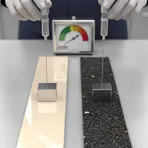
A number that shows how much two surfaces resist sliding when they touch

- Specialized
A number that shows how a measured amount like a test score relates to a yes-or-no group

- Specialized
A number that shows how much light or other radiation a material takes in when it passes through it

- Specialized
A number that shows how much people agree about the order of items

- Specialized
A number between -1 and 1 that shows how strongly two things change together

- Specialized
A number that shows how much air or water slows an object moving through it

- Specialized
A number that shows how much a material changes shape when you push or pull it

- Specialized
A number showing how much a material grows or shrinks for each degree of temperature change

- Specialized
A number showing how much a changing current in one coil makes a voltage in another coil


- Specialized
A number showing how strongly a coil creates voltage when the electric current changes

- Specialized
A number that shows how thick a liquid is and how hard it is to make it flow


- Specialized
A number that shows how much light energy a material takes in as it passes through

- Specialized
A number that shows how well several things together predict one result

- Specialized
A number that shows how strong and in which direction a straight link between two things is

- Specialized
A number that shows how closely two sets of ranked scores move together

- Specialized
A number that shows how similar the order of items is in two lists

- Specialized
How much one number changes when another number goes up by one

- Specialized
A number from -1 to 1 that shows the strength and direction of a straight-line connection between two things

- Specialized
A number showing how strongly two yes or no things are linked and its direction


- Specialized
A number estimating how strongly two yes-no variables are related
Surface Forms
Morphology
Etymology
Coefficient comes from the parts co- ('with') and efficient ('making' or 'bringing about'). Think of a coefficient as the number that works 'with' a variable to 'make' the result bigger or smaller, which is why coefficients multiply a variable or measure a property in math and science.