

to coarsen
 2
6.5
2
6.5

- verb
- /ˈkɔːrsən/
- A recent family of academic studies suggests that there may, in fact, be a coarsening effect of privilege.
- coarsened skin
- coarsened voice
- coarsened culture
Examples
-
Third, the growing appeal and accessibility of gambling to middle-class and poor families appears to have done less to domesticate gambling than to coarsen family life.
Academic text (1996) -
Years of exposure to salt water had caused the metal to coarsen and rust.
-
As foams age, they coarsen, and the average cell size increases.
Academic text (2006) -
The growing interest in virtue is in part a response to the widespread perception that public life in the United States has coarsened and is steadily getting worse.
Academic text (1996) -
As American foreign policy militarized, sound bites have replaced reasoned political debate, and American culture has coarsened.
Blog text (32) -
The growing harshness of Israeli military practices in the West Bank and Gaza is creating thousands of potential suicide bombers and Israel haters, as well as coarsening a generation of young Israeli soldiers.
Academic text (2002) -
The most striking example of the coarsening effect on campus relations, however, is the mass resort to the courts, bypassing the university's grievance machinery, by women faculty members.
Academic text (1992) -
As the weather grew harsher, the once smooth surface of the wood began to coarsen and splinter.
-
The artist preferred using rough materials to coarsen the texture of his sculptures.
Synonyms
 6
7.1
6
7.1
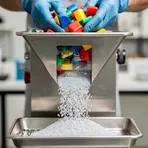
To make something into small grains like sugar
 2
4.2
2
4.2
To make a surface not smooth so it feels bumpy
 1
5.7
1
5.7
To make a surface not smooth or a person tougher

To make something seem more severe or unpleasant
Antonyms

How Coarse

Surface Forms
Morphology
Etymology
The word coarsen comes from the adjective coarse meaning 'rough' and the verb ending -en meaning 'make'. So to coarsen is to make something rough or less refined.