

climbing nightshade
- noun
- /ˈklaɪmɪŋ ˈnaɪtʃeɪd/
- South African
- Gardeners must take care to remove climbing nightshade because of its potential hazard to children and pets.
Examples
-
The berries of the climbing nightshade are highly toxic if ingested.
-
Climbing nightshade can quickly take over gardens and is dangerous to pets and livestock.
-
Climbing nightshade grows rapidly along fences and hedgerows in rural areas.
-
The climbing nightshade is often found in gardens.
-
Many people are unaware of the dangers of climbing nightshade.
-
Gardeners must take care to remove climbing nightshade because it is poisonous to children and pets.
-
The berries of the climbing nightshade can cause severe toxicity if eaten.
Synonyms
 1
7.4
1
7.4

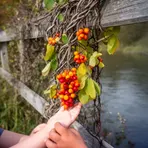
A wild vine or climbing shrub often with poisonous berries
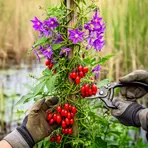
A poisonous climbing plant with purple flowers and bright red berries, also called bittersweet nightshade

A climbing plant with violet flowers and red berries that is poisonous

A poisonous climbing plant with purple flowers and red berries that often grows wild
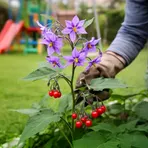
A plant with violet flowers and bright red berries that is very poisonous if eaten
Surface Forms
Morphology
The meaning is directly compositional: 'climbing' describes the growth habit of the noun 'nightshade', so a B1 learner who knows both words can infer it is a nightshade that climbs (a climbing vine). This adjectival modifier + noun pattern is a basic, cross-linguistic composition, making the overall sense transparent even if some botanical details remain specialized.
Etymology
Climbing nightshade may come from how the vine climbing wraps around fences and walls and how nightshade shows its dark leaves and berries that 'hide' in the shade. So the name helps you remember it is a poisonous vine with bright berries that you should avoid.