

bittersweet nightshade
- noun
- /ˈbɪtərˌswit ˈnaɪtˌʃeɪd/
- The hedge was overrun with bittersweet nightshade, its red berries glistening among the leaves.
Examples
-
Gardeners often struggle to remove bittersweet nightshade from their flower beds because it spreads so quickly.
-
The garden was overrun with bittersweet nightshade.
-
Children are regularly warned not to eat the berries of bittersweet nightshade as they are toxic.
-
Watch out for bittersweet nightshade!
-
The gardener warned us that bittersweet nightshade can be toxic if ingested.
-
I noticed bittersweet nightshade growing along the fence, with its bright red berries.
-
Children should be taught to avoid touching bittersweet nightshade due to its poisonous nature.
Synonyms
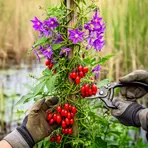
A poisonous climbing plant with purple flowers and bright red berries, also called bittersweet nightshade

A poisonous climbing plant with purple flowers and red berries that often grows wild

A poisonous climbing plant with purple flowers and red berries
How Toxic


Surface Forms
Morphology
This is a straightforward compound where 'bittersweet' modifies 'nightshade', so the overall meaning — a particular kind of nightshade with bittersweet characteristics (a vine/shrub with berries) — is directly inferable from the parts. The modifier+noun pattern is a common, compositional way to name plants across languages, so a B1 learner who knows both constituents would likely understand it refers to a specific (often poisonous) plant.
Etymology
Bittersweet nightshade comes from two parts: bittersweet because the bright red berries look sweet but taste bitter and can be poisonous, and nightshade because the plant often grows in dark, shady places and was grouped with other 'nightshade' plants known for danger. So the name warns that the plant is 'poisonous'.