
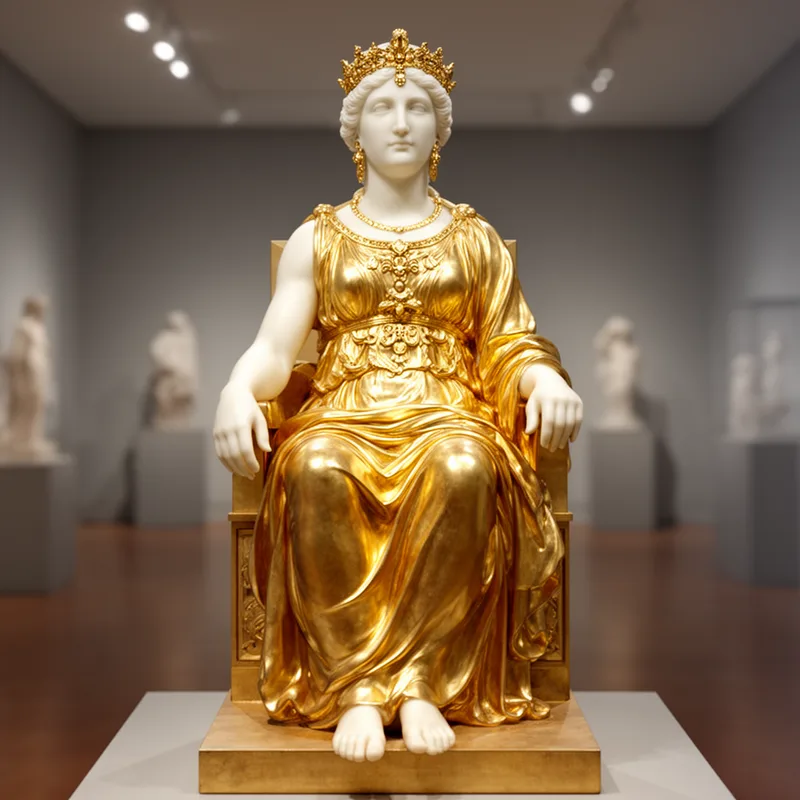
chryselephantine
- noun
- /ˌkrɪsəˈlɛfənˌtaɪn/
- Specialized
- A chryselephantine from the classical period was displayed in the main gallery.
Examples
-
The ancient Greeks created magnificent chryselephantine statues for their temples.
-
Experts carefully restored the damaged chryselephantine to its original beauty.
-
The museum displayed a magnificent chryselephantine statue.
-
Ancient Greeks often created chryselephantine sculptures.
-
The museum displayed a stunning chryselephantine statue of a goddess, showcasing intricate details of gold and ivory.
-
Ancient artisans often created chryselephantine objects, blending the elegance of gold with the richness of ivory.
-
Visitors marveled at the chryselephantine art pieces, which highlighted the luxurious materials used in classical sculptures.
Surface Forms
Morphology
chryselephantine = elephantine (opaque) = chryse + elephant + ine
The addition of the Greek combining form 'chryse-' is not transparent to average learners, so the material-based meaning is not derivable from the base.
Etymology
Chryselephantine comes from Greek parts chryse- 'gold' and elephant 'elephant' or 'ivory'. Today a chryselephantine is a sculpture or object made of gold and ivory.

