
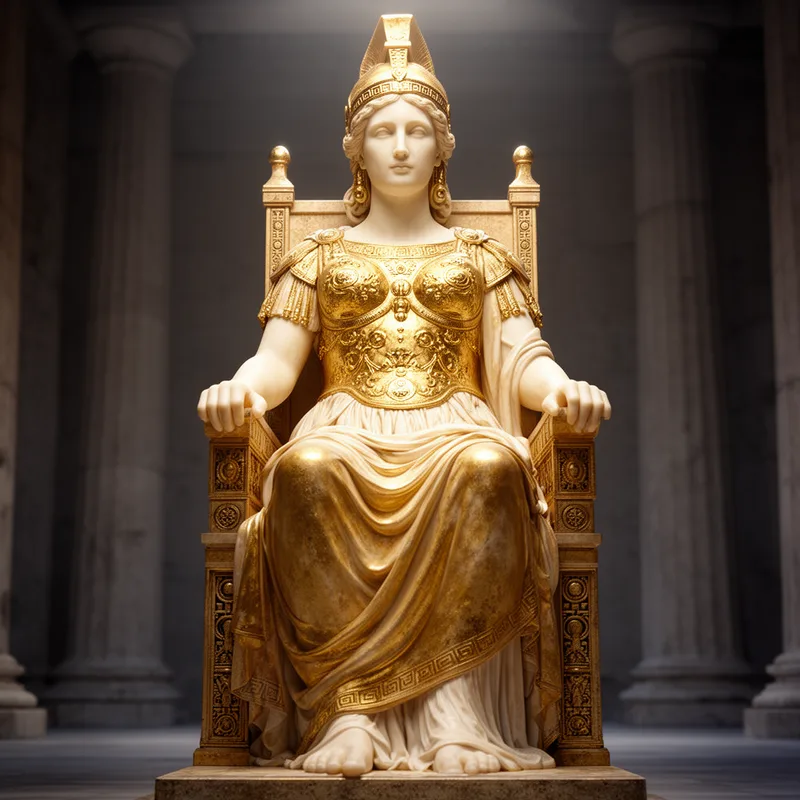
chryselephantine


 1
9.9
- adjective
- /ˌkrɪsəˈlɛfənˌtaɪn/
- Specialized
- The ancient temple housed a chryselephantine statue of the goddess Athena.
Examples
-
Art historians marveled at the chryselephantine craftsmanship of the Greek sculpture.
-
The ancient Greeks created chryselephantine statues of their gods.
-
A rare chryselephantine figure was discovered during the archaeological excavation.
-
The chryselephantine artwork was displayed in the museum.
-
The ancient temple housed a chryselephantine statue of the goddess Athena.
-
Art historians marveled at the chryselephantine craftsmanship of the Greek sculpture.
-
A rare chryselephantine figure was discovered during the archaeological excavation.
Surface Forms
Morphology
chryselephantine = elephantine (opaque) = chryse + elephant + ine
The combining form 'chryse-' (gold) is a Greek element not recognizable to average learners, so the full meaning 'gold and ivory' cannot be derived from the base.
Etymology
Chryselephantine comes from Greek parts chryse- 'gold' and elephant 'elephant' or 'ivory'. So, it describes something, especially a statue, that is made of or covered with gold and ivory.