
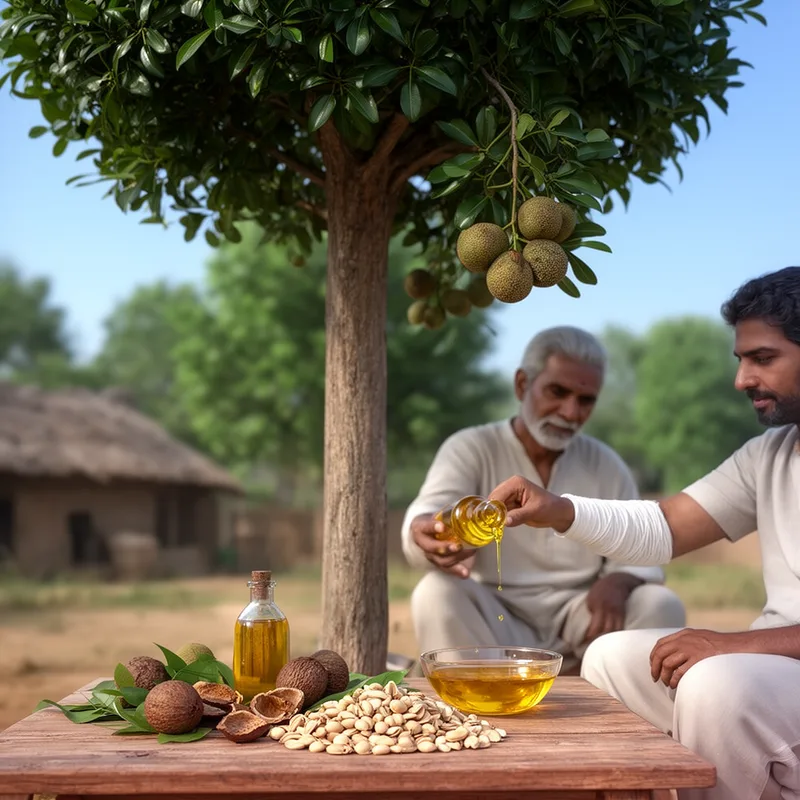
chaulmugra
- noun
- /ˈtʃɔːlmʊɡrə/
- Archaic
- The seeds of the chaulmugra tree are used to produce an oil that was historically significant in the treatment of leprosy.
Examples
-
The seeds of the chaulmugra tree were once a primary treatment for leprosy.
-
The chaulmugra tree is native to East India.
-
Botanists have long studied the properties of chaulmugra due to its medicinal uses.
-
Local traditions in India and Burma have included the oil from chaulmugra in their healing practices.
-
Many people have heard of chaulmugra oil's benefits.
-
Due to its effectiveness, chaulmugra oil has been an important part of traditional medicine in several regions of India.
-
Research has shown that chaulmugra is a valuable tree for its oil, which has been utilized in healing practices for centuries.
Synonyms

A tree from India that makes oily seeds once used to treat leprosy

A tree from East India whose seeds produce oil once used to treat leprosy
A tree from East India whose seeds make an oily medicine once used to treat leprosy
A tree from East India whose oily seeds are pressed to make an oil used to treat leprosy
A tree from South Asia whose seeds make an oil once used to treat leprosy and other skin diseases
Surface Forms
Etymology
Chaulmugra comes from a local Indian name for a tree whose seeds produce a 'healing oil' long used in traditional medicine in India and Burma. English took that local name for both the plant and the oil, so chaulmugra now means the tree (Hydnocarpus wightiana) and the medicinal oil once used to treat leprosy.

