
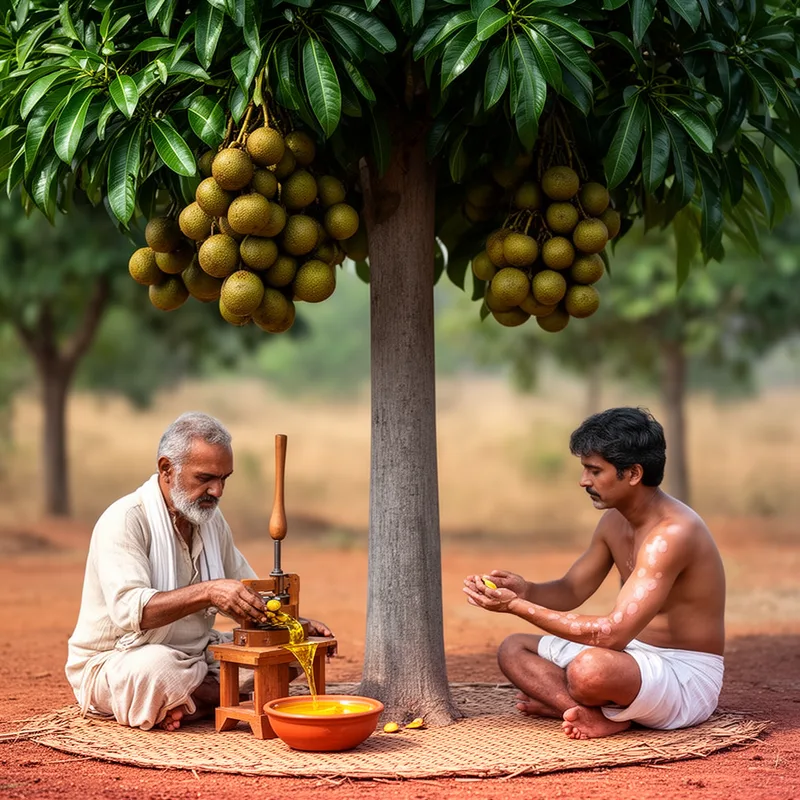
Hydnocarpus kurzii
- noun
- Specialized
- During the early 20th century, Hydnocarpus kurzii was an important source of chaulmoogra oil for leprosy treatment.
Examples
-
Researchers studied the effectiveness of oil extracted from Hydnocarpus kurzii seeds in treating leprosy.
-
Researchers studied the effectiveness of oil extracted from Hydnocarpus kurzii seeds in treating skin conditions.
-
The medicinal properties of Hydnocarpus kurzii were especially valued in traditional Indian medicine.
-
The Hydnocarpus kurzii tree is native to East India.
-
Many traditional medicines include Hydnocarpus kurzii for its healing properties.
-
During the early 20th century, Hydnocarpus kurzii was an important source of chaulmoogra oil for leprosy treatment.
-
Many traditional medicines include Hydnocarpus kurzii for its therapeutic use in treating skin diseases.
Synonyms
A tree from East India whose seeds make an oily medicine once used to treat leprosy
A tree from East India whose oily seeds are pressed to make an oil used to treat leprosy
Surface Forms
Morphology
Hydnocarpus + kurzii
This is a binomial species name: knowing 'Hydnocarpus' (a tree genus) lets a learner infer that Hydnocarpus kurzii is a type of Hydnocarpus tree, so the general category is transparent. However, the specific epithet 'kurzii' is a non-lexical proper name and provides no semantic information about the tree's properties (e.g., oily seeds or medicinal use), so the full encyclopedic meaning is not predictable.
Etymology
Hydnocarpus kurzii has a name that helps you remember it: Hydnocarpus may come from words meaning 'oil' and 'fruit', and kurzii honors Kurz, a scientist who studied plants in India. Because its seeds are oily, people once made an oil from them to treat 'leprosy'.

