
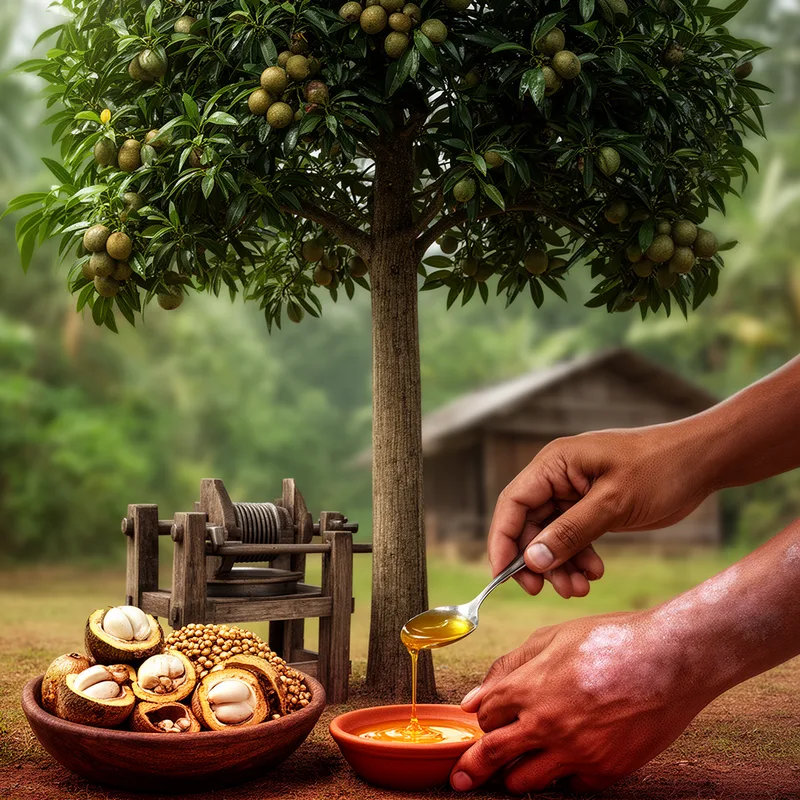
Taraktogenos kurzii
- noun
- Specialized
- Chaulmoogra oil is pressed from the seeds of the Taraktogenos kurzii tree, which was historically used to treat leprosy.
Examples
-
The seeds of Taraktogenos kurzii are prized for their medicinal oil.
-
Researchers studied extracts from Taraktogenos kurzii to evaluate their efficacy in treating skin diseases.
-
Chaulmoogra oil is pressed from the fruit of Taraktogenos kurzii.
-
The Taraktogenos kurzii tree is known for its medicinal properties.
-
Many herbalists recommend Taraktogenos kurzii oil for skin ailments.
-
The Taraktogenos kurzii produces seeds that are an important source of chaulmoogra oil, valued for its medicinal properties.
-
In traditional medicine, Taraktogenos kurzii has been used for centuries due to the healing effects of its oil on skin diseases.
Synonyms

A tree from East India whose seeds produce oil once used to treat leprosy
A tree from East India whose oily seeds are pressed to make an oil used to treat leprosy

A South Asian tree whose seeds make an oil once used to treat leprosy

A tree from India that makes oily seeds once used to treat leprosy
A tree from South Asia whose seeds make an oil once used to treat leprosy and other skin diseases
Surface Forms
Morphology
Taraktogenos + kurzii
This is a Latin binomial (scientific species) name: while 'Taraktogenos' signals a genus of trees, 'kurzii' is a non-lexical specific epithet (a proper name) and not interpretable by learners. The detailed meaning (an East Indian tree with oily seeds yielding chaulmoogra oil used medicinally) cannot be derived from the constituents, so a B1 learner who knows the parts would not infer the full sense.
Etymology
Taraktogenos kurzii is the Latin name for an East Indian tree whose oily seeds are pressed to make 'chaulmoogra oil', a traditional medicine once used to treat 'leprosy'. Picture small seeds being squeezed for healing oil, and that image helps you remember that this name refers to an oil-producing medicinal tree.

