

cecropia moth
- noun
- /sɪˈkroʊpiə mɔθ/
- US
- We found a beautiful cecropia moth resting on the tree trunk this morning.
Examples
-
A cecropia moth can have a wingspan of up to six inches, making it one of the largest moths in North America.
-
The larvae of the cecropia moth are known for their impressive size and bright colors.
-
The cecropia moth is known for its large size.
-
I saw a cecropia moth in my backyard yesterday.
-
The cecropia moth is known for its beautiful reddish-brown wings with eye-like spots.
-
During the summer, we often see the cecropia moth fluttering around the garden.
-
Cecropia moth larvae primarily feed on the leaves of maple and cherry trees.
Synonyms
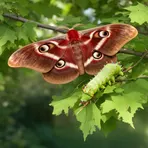
A large North American moth with brown and red wings whose caterpillars eat tree leaves

A very large North American moth whose caterpillars eat the leaves of forest trees
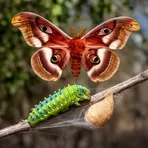
A group of large North American moths that make silk, like the cecropia moth

A large moth with big wings whose caterpillars make silk
Surface Forms
Morphology
This is a straightforward noun–noun compound where the first element names a species (cecropia) and the second names the animal class (moth); knowing both constituents yields the interpretation ‘a moth of the cecropia species’. The meaning follows standard taxonomic/naming composition (common across languages) with no idiomatic or metaphorical shift, so it is immediately derivable by learners who know the parts.
Etymology
Cecropia moth may come from an ancient Greek name 'Cecropia' that early scientists used for things that seemed large or noble. They gave this name because the moth is very big and has wide wings with eye-like spots, which made it look impressive. That's why today cecropia moth means a very large, showy North American moth.

