
Hyalophora
- noun
- /ˌhaɪəˈlɒfərə/
- Specialized
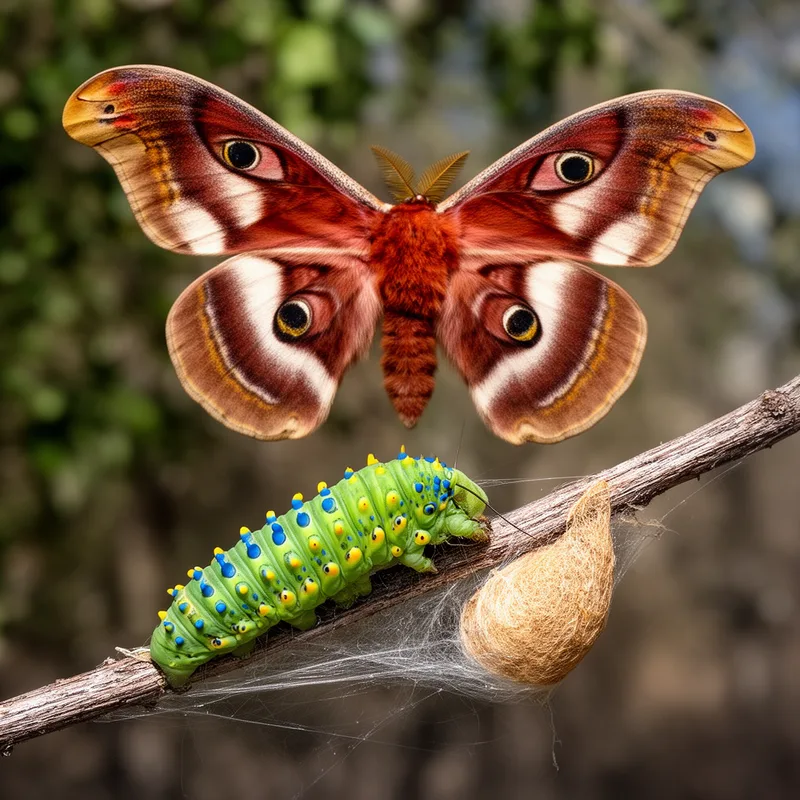
- The Hyalophora genus includes the impressive Cecropia moth, one of North America's largest moths.
Examples
-
The Hyalophora moth is one of the largest in North America.
-
A Hyalophora caterpillar can be identified by its bright green color and distinctive blue and yellow tubercles.
-
Scientists often study Hyalophora to understand silkworm development and silk production.
-
Have you ever seen a Hyalophora in the wild?
-
The Hyalophora genus includes the impressive Cecropia moth, one of North America's largest moths.
-
A Hyalophora caterpillar can be identified by its bright green color and distinctive blue and yellow tubercles.
-
Scientists often study Hyalophora to understand silkworm development and silk production.
Compounds

- Specialized
A very large North American moth whose caterpillars eat the leaves of forest trees
Surface Forms
Etymology
Hyalophora comes from Greek parts hyalo- meaning 'glass' and -phora meaning 'to carry', so it is like 'glass-bearer' and helps you picture these large, showy silkworm moths as carrying shiny, glass-like spots on their wings.

