
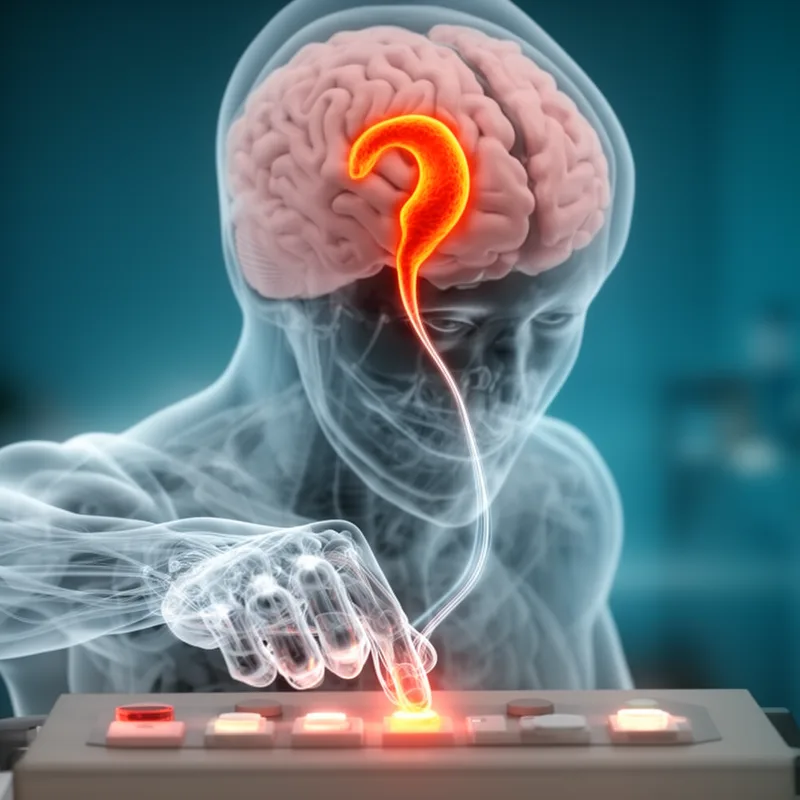
caudate nucleus


 1
9.9
1
9.9
- noun
- /ˈkɔːdeɪt ˈnjuːklɪs/
- Specialized
- The caudate nucleus is an area of the brain associated with learning, memory, and emotion.
Examples
-
Research indicates that the caudate nucleus is involved in habits and procedural memory.
-
As far as we know, it's a stimulation of the brain's ventral tegmental area and caudate nucleus.
-
However, spongiform change itself remains nonspecific; the only consistent location is in the head of the caudate nucleus.
Academic text (2004) -
Other evidence for the distinction of a hippocampal-based memory system and a non-hippocampal-based memory system came from the double dissociation of the caudate nucleus and the fornix for maze performance of rats.
Academic text (1997) -
The caudate nucleus plays a crucial role in the brain's reward system and movement coordination.
-
Damage to the caudate nucleus can lead to problems with motor control and learning new skills.
Synonyms
 1
9.9
1
9.9
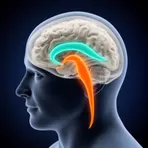
A part of the brain shaped like a tail
Surface Forms
Morphology
The term is compositionally built from 'caudate' (tail-like) + 'nucleus' (a cluster or core), so the meaning 'a tail-shaped cluster of neural cell bodies' is directly derivable from the constituents. Although technical, the noun+noun composition is literal and follows predictable morphological logic found across languages, so a learner who knows both words would infer the MWE's meaning.
Etymology
Caudate nucleus comes from Latin words: caudate means 'tail' and nucleus means 'small center', because this part of the brain is long and looks like a tail. It sits deep in the brain and helps with movement and learning, so the 'tail' image explains why scientists call this specific area the caudate nucleus.