
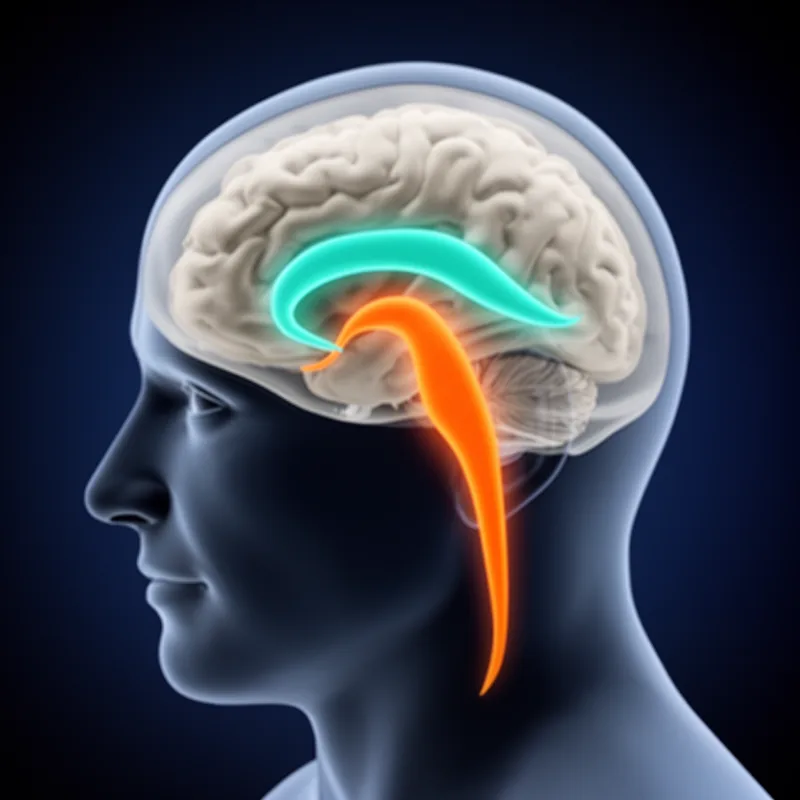
caudate


 1
9.9
1
9.9
- noun
- /ˈkɔːdeɪt/
- Specialized
- Furthermore, the caudate shows age-related neurodegenerative changes (Betts et al., 2016) at similar rates to the hippocampus, which may explain aging-related declines in route navigation performance.
Examples
-
All were older than Creutzfeldt's patient and demonstrated a destructive process in the cerebral cortex, especially in the rolandic region, caudate, putamen, and thalamus.
Academic text (2004) -
And let's see the one on the left shows ventral tegmental area on the left and the caudate nucleus on the right.
-
Node-wise analysis showed that the caudate, putamen, and thalamus all showed a higher degree, lower path length, and higher efficiency in children.
Blog text (4) -
These investigators found that the caudate associated drumming as a reward in the brain and that a history of such reward with a particular person can influence future decisions to help that person.
Academic text (2015) -
Now here in this slide I'm showing just the dorsal major dorsal striatal components, the caudate and the futane.
-
Relative to caudate and posterior neocortical damage, volume loss in the structures of the mesial temporal lobe was found to be related to poor recognition memory.
Academic text (1997) -
In particular, caudate, putamen, and thalamus regions of the subcortical division show some of the largest changes in fractional anisotropy of white-matter tracts, increasing almost 30% to 50% from 5 to 25 years of age.
Blog text (4) -
Moriarty et al. (1995) found that relative blood flow in the left caudate and interior cingulate cortex was associated with the severity of tics in 50 people with TS (compared with 20 controls).
Academic text (1997) -
The caudate is crucial for coordinating voluntary movement and is located in the brain's basal ganglia.
-
Research has shown that damage to the caudate can impair a person's ability to learn new tasks.
Synonyms
 1
9.9
1
9.9
A part inside the brain shaped like a tail that helps control movement and learning
Compounds
- Specialized
1
9.9
A part inside the brain shaped like a tail that helps control movement and learning
Surface Forms
Morphology
Etymology
Caudate for the brain part comes from Latin cauda 'tail' because this part is long and tail-shaped in the brain, so doctors call it the caudate nucleus.