

cataplasm


 1
9.9
1
9.9
- noun
- /ˈkætəˌplæzəm/
- Archaic
- What is a cataplasm?
Examples
-
In olden times, people often used a clay cataplasm to treat bruises and sprains.
-
Applying a warm cataplasm helped relieve her chest congestion during the winter illness.
-
The doctor recommended a cataplasm to ease the swelling on his leg.
-
The cataplasm was too hot!
-
The doctor recommended a cataplasm made of warm herbs to soothe the patient’s aching muscles.
-
She applied a cataplasm to the bruise to help reduce the swelling and relieve the pain.
-
For her sore throat, she used a cataplasm of flaxseed mixed with hot water to ease the discomfort.
Synonyms
 8
8.4
8
8.4
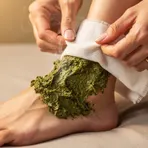
A soft warm mass of herbs or flour applied to the skin to reduce pain and swelling
 3
6.5
3
6.5
A hot soft material put on the skin to reduce pain or swelling
Surface Forms
Morphology
Etymology
Cataplasm comes from Greek parts kata- 'down' and plassein 'to form', so it originally meant something 'formed and spread down' on the skin. Think of it as a warm 'paste' or plaster you put on a sore place to ease pain and swelling, which is why a cataplasm is a soft, moist poultice used to soothe the body.