

cartilaginous structure


 1
7.4
1
7.4
- noun
- /ˌkɑːrtɪˈlædʒɪnəs ˈstrʌkʧər/
- Specialized
- The human ear is a good example of a cartilaginous structure in the body.
Examples
-
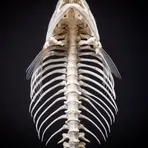
Sharks have a cartilaginous structure instead of a bony skeleton.
-
The human ear is a complex cartilaginous structure.
-
In embryos, many bones start as a cartilaginous structure before hardening.
-
Sharks have many cartilaginous structures in their bodies.
-
The shark's cartilaginous structure allows it to be more flexible than bony fish.
-
The cartilaginous structure of the human ear helps maintain its shape and support.
-
In some species, the cartilaginous structure of the spine can absorb shock during movement.
Synonyms
 33
4.3
33
4.3
A strong, flexible tissue in joints that is softer than bone
Antonyms
Surface Forms
Morphology
The phrase is a straightforward composition of 'cartilaginous' (made of cartilage) modifying 'structure' (a constructed assembly), so the meaning 'a structure made of cartilage' is directly derivable from the parts. Although somewhat technical, the modifier+noun pattern is compositional and cross-linguistically transparent (cognates exist in many languages), so a learner who knows both words can infer the MWE meaning.
Etymology
Cartilaginous structure is a name for a structure made of cartilaginous tissue. Imagine a soft, bendy frame like the inside of your ear or the tip of your nose. That's why it means 'a body part shaped or supported by cartilage rather than bone'.