

carapace
 6
8.7
6
8.7

- noun
- /ˈkɛrəˌpeɪs/
- Specialized
- Females average 15.5 cm across the widest part of the carapace and males, 16.5 cm.
- carapace width
- carapace length
- carapace size
Loading YouTube…
Watch on YouTubeAbandoned malls are consumerism at its terminus, an empty carapace brimming with nostalgia, not meaning.
- Abandoned malls are consumerism at its terminus, an empty carapace brimming with nostalgia, not meaning.
Examples
-
Basicladia chelonum and B. crassa thrive on the carapaces of nearly all mature aquatic turtles in North America.
Academic text (1992) -
And then once she starts to lay her eggs, then we really get in there and we measure carapace length and width.
-
Inside the corroded steel carapace lies a nuclear reactor.
Academic text (2012) -
Thousands of dried black insect carapaces were exposed in a dense layer.
Academic text (2012) -
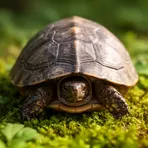
The turtle retreated into its carapace for protection when it sensed danger.
-
Scientists measured the carapace width of the crab to analyze its growth.
-
The carapace of the tortoise is hard and serves as a shield against predators.
Synonyms
 296
1.0
296
1.0
A hard outer covering that protects animals, eggs, or nuts
 94
3.5
94
3.5
A hard outer covering on animals like insects or turtles that protects the body
 20
3.4
20
3.4
A hard protective outer part on some animals and plants
 1
6.3
1
6.3
A hard outer covering that protects animals like insects or turtles
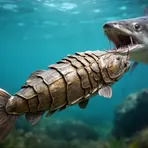
A hard outer covering on some animals that protects and supports the body
How Protective

Surface Forms
Etymology
Carapace comes from French and an old Greek word karapax, which meant 'shell' or 'hard skin'. So a carapace is the strong outer shell that protects animals like crabs, turtles, and spiders.