
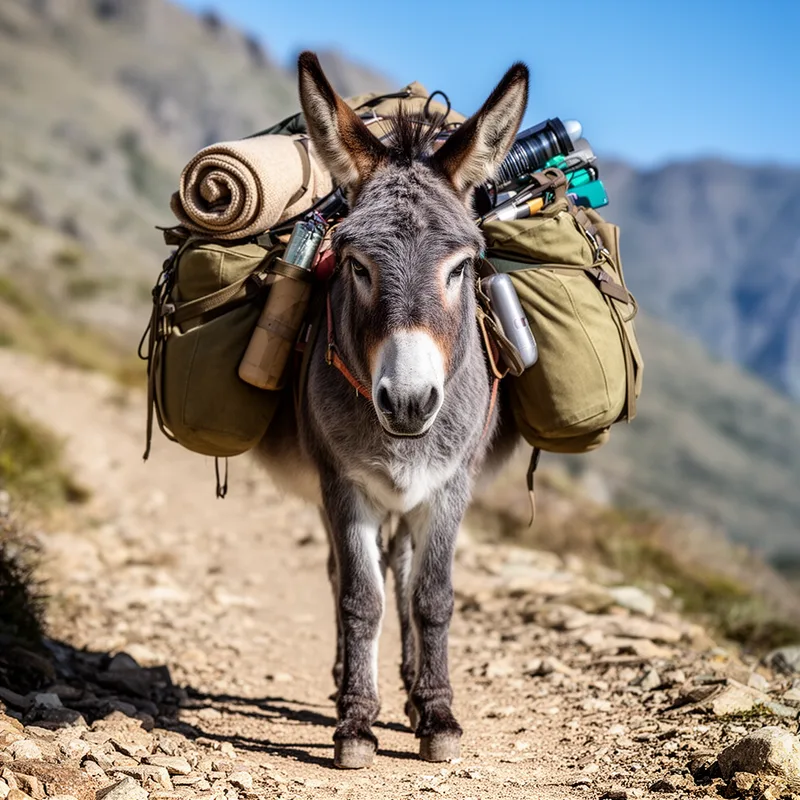
burro
 17
7.4
17
7.4

- noun
- /ˈbɜːroʊ/
- I gunned the dusty old car and it racketed down a hill, past a burro bearing a load of corn husks five feet high.
- pack burros
Examples
-
We could get us a couple of burros.
-
I pay taxes for federal lands -- for federally protected wild horses and burros to live on.
Blog text (15) -
Stable your burro in the barn.
-
I think I'll see if the burros are all right.
-
I remember watching my grandfather saddling up the burro early in the morning.
Academic text (2004) -
On July 29, they drove through herds of bison and burros, frequently stopping while animals surrounded their vehicle.
Academic text (2014) -
They're all riding around on burros, working hard in the fields, saying the rosary, and seeing apparitions of Mary.
Blog text (27) -
During the 1920s, all sorts of donkey-drawn carts and wagons and pack burros.
Academic text (1997) -
Planted tamarinds and palms bordered the highway, making stingy shade for a half-dozen old men and their burros who watched the traffic.
Fiction book (1999) -
The hiker used a burro to carry supplies up the mountain trail.
Synonyms
 111
1.0
111
1.0
A small animal like a horse with long ears often used to carry loads
 2
3.5
2
3.5
An animal that carries loads, like a mule or donkey
Compounds

- Specialized
A large deer that lives in western North America and has very big ears and forked antlers
How Big

Surface Forms
Etymology
Burro comes from Spanish burro, which simply means 'donkey', and English borrowed it for the small donkeys used as pack animals. A helpful way to remember it is that burro sounds like 'burden', and these little donkeys often carry loads.