
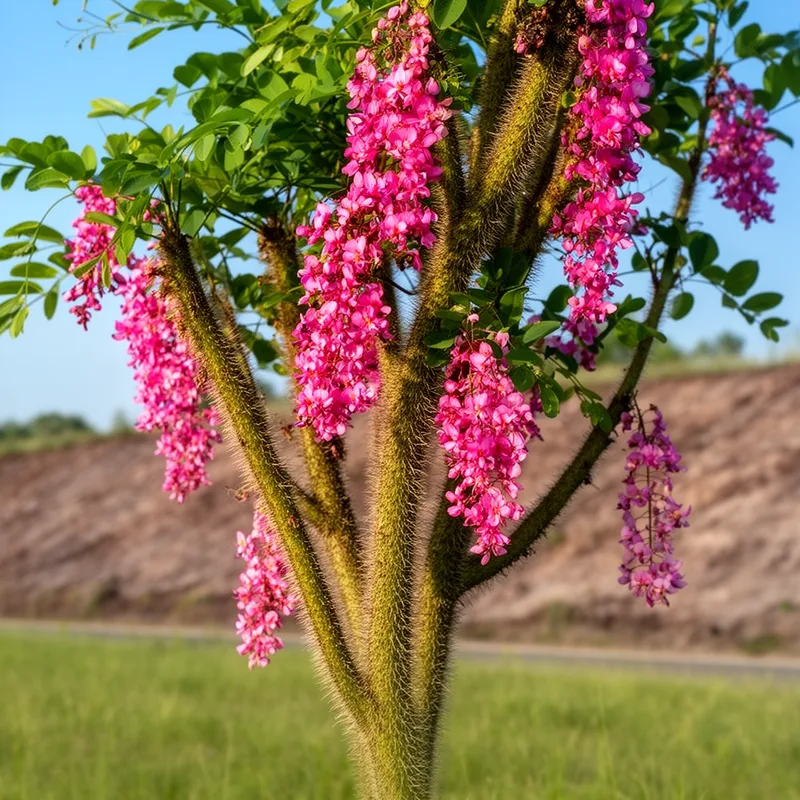
bristly locust
- noun
- /ˈbrɪs.tli ˈloʊ.kəst/
- US
- We admired the bright pink blooms of the bristly locust during our hike.
Examples
-
The bristly locust is often planted along roadsides for erosion control.
-
A dense thicket of bristly locust blocked the edge of the old field.
-
The bristly locust is known for its vibrant pink flowers.
-
Many gardeners plant bristly locusts for their beauty.
-
A dense thicket of bristly locust blocked the edge of the old field.
-
The bristly locust is often planted along roadsides for erosion control.
-
We admired the bright pink blooms of the bristly locust during our hike.
Synonyms
 3
4.6
3
4.6

A strong tree with very hard wood used for fence posts

 1
5.5
1
5.5
A hardwood tree with compound leaves and very strong wood
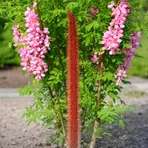
A large shrub or small tree with bristly stems and groups of pink flowers
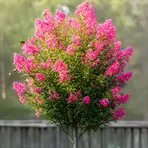
A large shrub or small tree with bristly stems and clusters of pink flowers
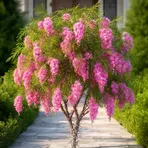
A large shrub or small tree with spiky stems and pink flower clusters used in gardens
Surface Forms
Morphology
The phrase is a simple adjective + noun composition: 'bristly' (covered in short stiff hairs) modifies 'locust' (a tree species), so the overall meaning — a locust tree with bristly stems — is directly derivable from the parts. This descriptive, compositional structure is cross-linguistically common and therefore should be understandable to a B1 learner who knows both constituent words.
Etymology
Bristly locust paints a simple picture: locust is the tree or shrub, and bristly shows its stems have stiff, sharp hairs. So, the name means 'a large shrub or small tree with bristly stems and clusters of pink flowers'.