
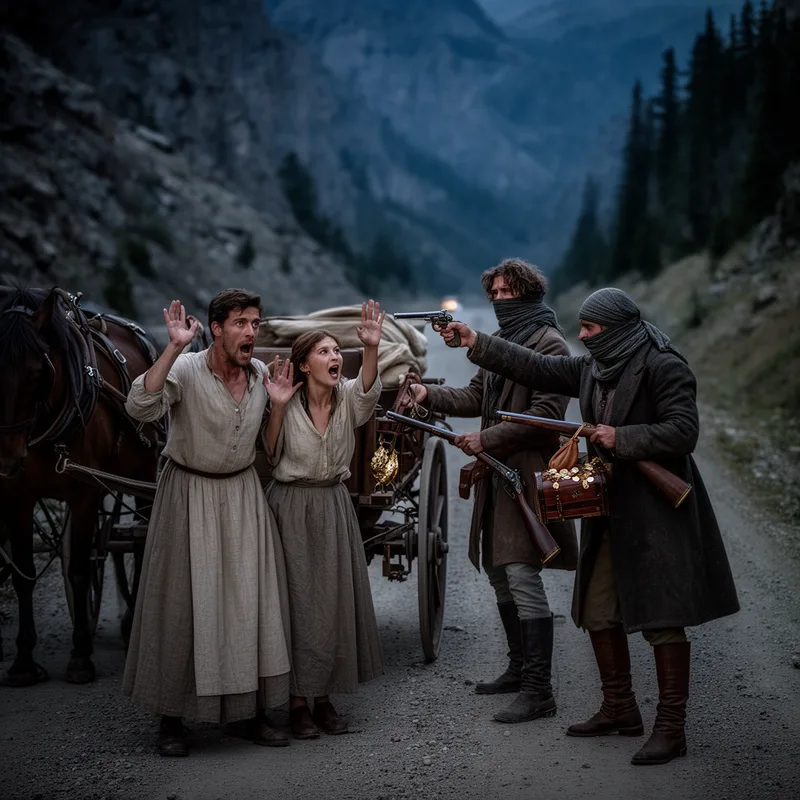
brigandage


 1
9.9
1
9.9
- noun
- /ˈbrɪɡənˌdɪdʒ/
- Archaic
- The authorities struggled to control brigandage, as gangs roamed the countryside, preying on unsuspecting villagers.
Examples
-
This did not, however, stop various groups from continuing their armed resistance, including attacks on farmers in the border region and other acts of brigandage.
Academic text (2006) -
Brigandage?
-
His father had the distinction of being hanged by the USSR for the crime of brigandage.
-
As to criminality in general and rural brigandage in particular, most contemporaries and modern scholars would agree that they were notably on the upswing in the eighteenth century.
Academic text (1993) -
"...sailing under false colours, arson, kidnapping, looting, poaching, brigandage, pilfering, depravity, depredation, and general lawlessness.
-
The British began to move against brigandage, slave seizures, and other forms of lawlessness (which were rampant in the Ilorin area around the turn of the century) and began to try to shore up the position of Emir Suleiman against his chiefs in the interest of indirect rule.
Academic text (2006) -
During the 19th century, brigandage was common in rural areas, where bandits would steal livestock and attack travelers.
-
In times of instability, brigandage often increased, leading to widespread fear among the local population.
Synonyms
 749
2.3
749
2.3
Stealing things from people and places such as shops and banks using force or threats
 72
4.9
72
4.9
Stealing things from shops, often during a riot or disaster
 2
7.9
2
7.9
The act of attacking people to steal from them, often done by organized gangs
 1
9.9
1
9.9
Violent stealing of things from people, often during war

Violent robbery by a gang of armed people, often in South Asia

A robbery by an armed gang, often in rural South Asia
Antonyms

How Violent
- Offensive
∞
2.8

- Archaic
1
9.9
749
2.3
356
1.1
- Formal
3
6.9
Surface Forms
Morphology
Etymology
Brigandage comes from brigand, an old French and Italian word for a 'bandit' or thief. So brigandage is the violent robbing done by a 'band' (group) of robbers — the actions of brigands.