
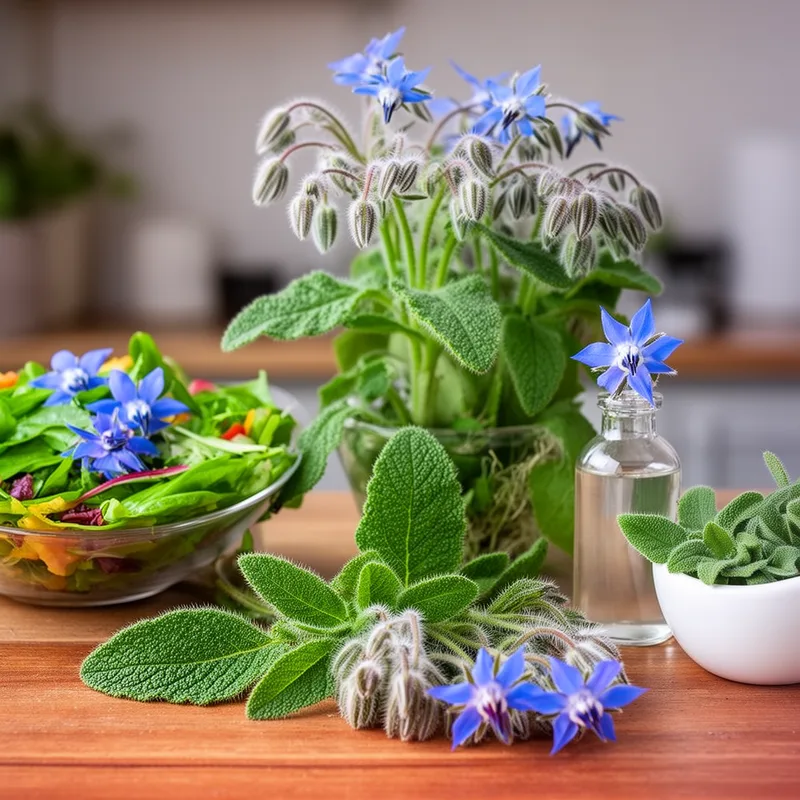
borage
 1
9.4
1
9.4

- noun
- /ˈbɔrɪdʒ/
- The salad was colorful and fresh, topped with vibrant borage flowers.
- borage oil
- borage blossom
- borage leaves
Examples
-
OK, so the next one we're going to make, sparkling borage has the less potent simple syrup here.
-
Oh yeah, Got this monster borage volunteer.
-
But what I can get enough of our borage seedlings.
-
Then we've got thyme and then the borage flowers and then mint in the bottom level.
-
So if you're out there, you're trying to get a proposal, slip a little borage in your man's drink.
-
She thought alfalfa tea would be good since it was generally stimulating and refreshing, with some borage flowers and leaves, which made a healthful tonic, and gillyflowers for sweetness and a mild spicy taste.
Fiction book (1990) -
In herbal medicine, borage is often used to relieve anxiety and improve mood.
-
You can add borage leaves to your dishes for a unique cucumber-like taste.
Synonyms

A hairy annual herb with blue flowers that people eat in salads, cook as a vegetable, and use as medicine
A hairy plant with blue flowers from Europe that people eat like spinach
A perennial plant with rough hairy leaves and blue star-shaped flowers whose leaves and flowers are edible
Compounds

- Specialized
A family of flowering plants with coiled flower clusters and small nutlike fruits
Surface Forms
Etymology
Borage probably comes from an old word burra meaning 'wool' or 'fuzz', because the herb has soft, hairy leaves. So thinking of 'wool' or 'fuzz' is an easy way to remember this blue, star-shaped-flower herb that people use in salads and to attract bees.