
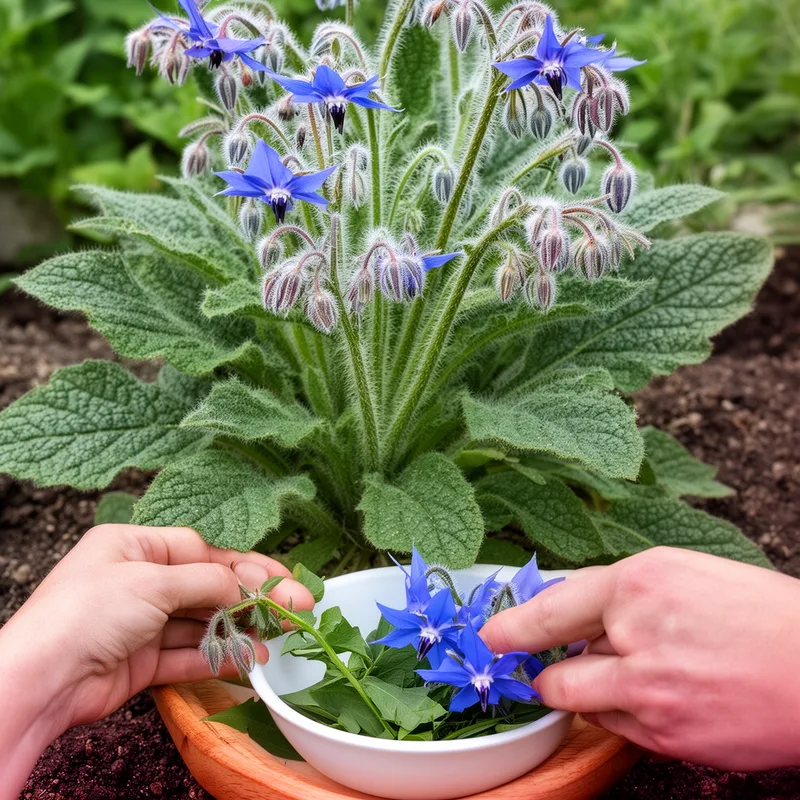
Borago
- noun
- /bəˈrɑːɡoʊ/
- Specialized
- The most well-known species of Borago is Borago officinalis, commonly called borage.
Examples
-
The most well-known species of Borago is Borago officinalis, commonly called borage.
-
Many chefs use Borago in their salads.
-
Borago is frequently grown in gardens for its edible flowers and leaves.
-
Herbalists sometimes use Borago extracts for their purported medicinal properties.
-
The Borago plant thrives in sunny gardens.
-
Borago is frequently grown in gardens for its edible flowers and leaves.
-
Many chefs use Borago in their salads.
Synonyms

A group of herb plants from the Mediterranean with hairy leaves and blue star-shaped flowers
Compounds

- Specialized
A hairy annual herb with blue flowers that people eat in salads, cook as a vegetable, and use as medicine
- Specialized
A group of herb plants from the Mediterranean with hairy leaves and blue star-shaped flowers
Surface Forms
Etymology
Borago comes from old Latin and Italian names like borrago and borragine, and it probably goes back to a word for 'rough wool' because the leaves are very hairy. So the name helps you remember this herb as the 'hairy' plant with blue, star-shaped flowers.

