
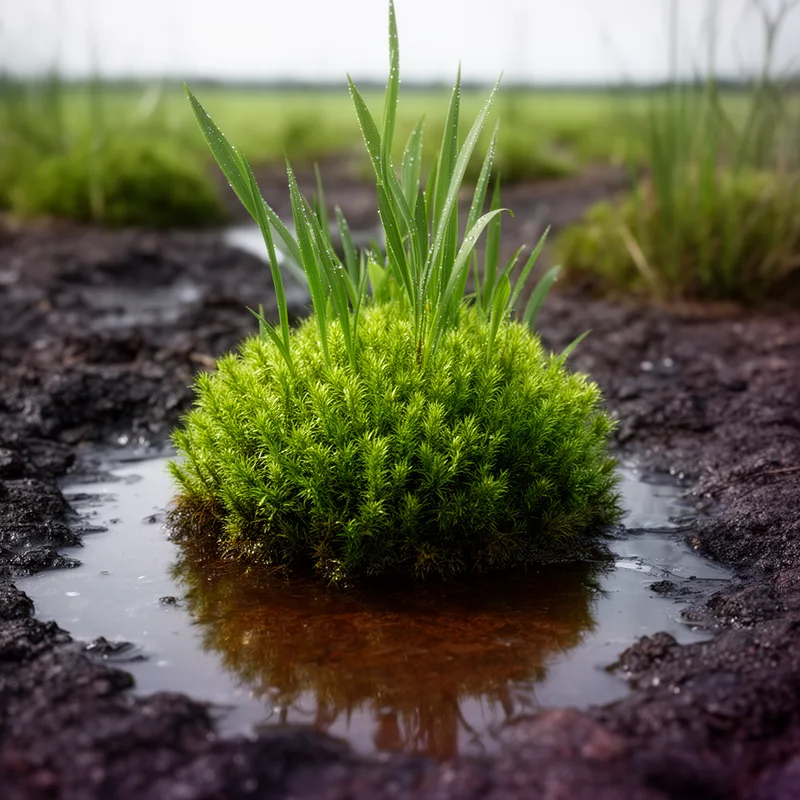
bog plant
- noun
- /bɔg plænt/
- The garden's new section features many beautiful bog plants native to wetland areas.
- hardy bog plants
- two bog plants
Examples
-
After heavy rains, bog plants thrived in the marshy corners of the reserve.
-
Sphagnum moss is a well-known type of bog plant used for soil enhancement.
-
The bog plant thrives in wet conditions.
-
Many bog plants can survive in low-nutrient soil.
-
To create a beautiful garden, consider incorporating various bog plants that thrive in wet, spongy soil.
-
Many gardeners find that bog plants are ideal for areas that remain consistently moist.
-
If you want to attract wildlife, planting bog plants around your pond can provide essential habitats.
Synonyms
A plant that grows in soft wet ground like a reed or cattail

A plant that grows in soft wet ground near water, like cattails
How Aquatic


Surface Forms
Morphology
The meaning 'a plant that grows in bogs' is directly and compositionally derived from 'bog' (a damp peatland) + 'plant' (a photosynthetic organism). This noun–noun compound follows a transparent, cross-linguistic pattern, so a B1 learner who knows both constituents will readily infer the MWE's meaning.
Etymology
Bog plant is a name made from two words: bog, meaning wet, spongy ground, and plant, meaning a green living thing, so it gives the clear image of a plant growing in a bog. That's why it means 'a plant that grows in wet, spongy land'.