
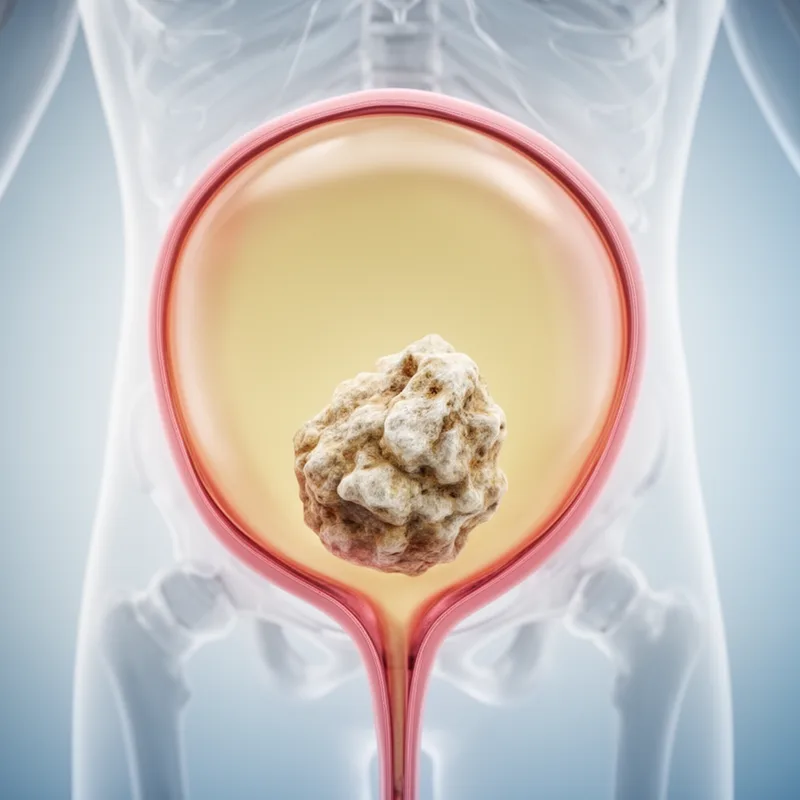
bladder stone


 1
5.5
1
5.5
- noun
- /ˈblædər stoʊn/
- Specialized
- The doctor explained that bladder stones can develop from high mineral levels in the urine.
Examples
-
Symptoms such as pain during urination may indicate the presence of bladder stones.
-
OT, but that reminds me of a male patient who had a large bladder stone removed, and when it was cut in half, it was found it had formed around a birthday cake candle.
Blog text (12) -
One might interpret the symptoms as possibly a kidney or bladder stone or maybe even a UTI since there was pain on urination.
Blog text (30) -
The presence of blood in the urine may have different origins and focus on the trail of several conditions such as cystitis, bladder stones, or prostate disorders.
Blog text (15) -
Though I have in my life experienced gout, bladder stones, a botched bone marrow biopsy, and various other screamable insults, until recently I had no idea what pain was.
Blog text (13) -
To dissolve bladder stones, the patient was advised to drink plenty of fluids daily.
Synonyms
 976
1.0
976
1.0
A hard natural rock used for building or a small piece of it

A hard stone that forms in the bladder

A hard stone that forms in the bladder or tubes that carry urine
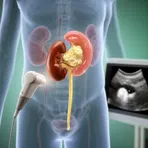
A hard stone that forms in the kidney and can block urine
How Severe

Surface Forms
Morphology
The meaning is directly compositional: a 'stone' located in the 'bladder' corresponds to a hard mass formed in that organ, so a learner who knows both words can infer the medical sense. This noun-noun construction is common cross-linguistically (e.g. 'piedra en la vejiga', 'calcul rénal/vesical' analogues) and appears in everyday and medical contexts, making it transparent to B1 learners.
Etymology
Bladder stone is a simple, literal name: the bladder is a pouch that holds urine and a stone is a hard lump. So, a bladder stone is a hard mass that forms inside that pouch and can cause pain.