
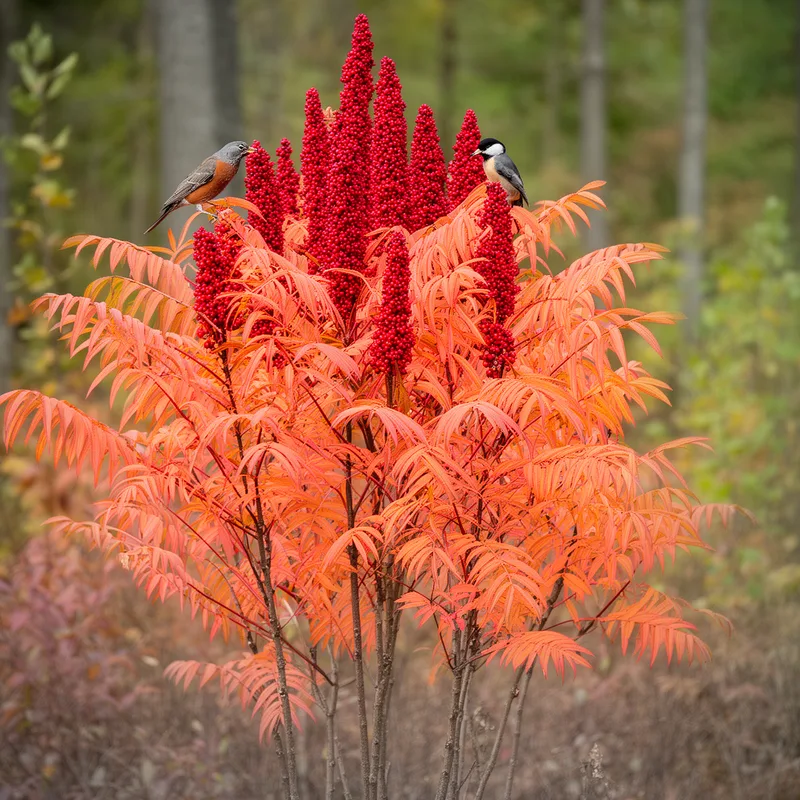
black sumac
- noun
- /blæk ˈsuːmæk/
- US
- Birds love to eat the bright red berries produced by black sumac in the autumn.
Examples
-
Despite its name, black sumac is harmless and should not be confused with its poisonous relatives.
-
The woods behind her house were thick with black sumac and other native shrubs.
-
The black sumac is often found in wetlands.
-
I spotted a black sumac while hiking.
-
The vibrant red berries of black sumac attract many birds during the fall season.
-
In the park, we observed a large patch of black sumac thriving near the water's edge.
-
Many gardeners appreciate black sumac for its unique appearance and wildlife-friendly qualities.
Synonyms

A common shrub from eastern North America with smooth, waxy leaves and clusters of red berries
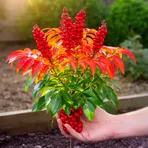
A small bush with shiny leaves and groups of red berries that is not poisonous

A shrub from eastern North America that is not poisonous with waxy leaves and clusters of red berries

A small bush with green summer flowers and bright red berries that grows in eastern North America

A low bush from eastern North America with divided leaves and clusters of red berries that attract birds
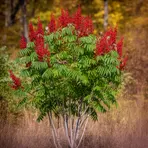
A common not poisonous shrub from eastern North America with winged leaf stalks and red berries

A shrub from eastern North America with red berries and leaves that turn bright red in fall
Surface Forms
Morphology
The noun phrase is a straightforward adjective + noun composition: a learner who knows 'black' and 'sumac' will understand it refers to a kind or variety of sumac characterized by 'black' (dark) features. Adjective + noun naming of plant varieties is a common, compositional pattern across languages, so the meaning is directly derivable from the constituents.
Etymology
Black sumac may come from the plant's look: sumac is an old word for shrubs with bright red berries, and the word black probably points to the dark clusters or bark. So the name gives a simple picture of a berry shrub and helps you remember this 'harmless' native plant.

