
bivalent
9.9
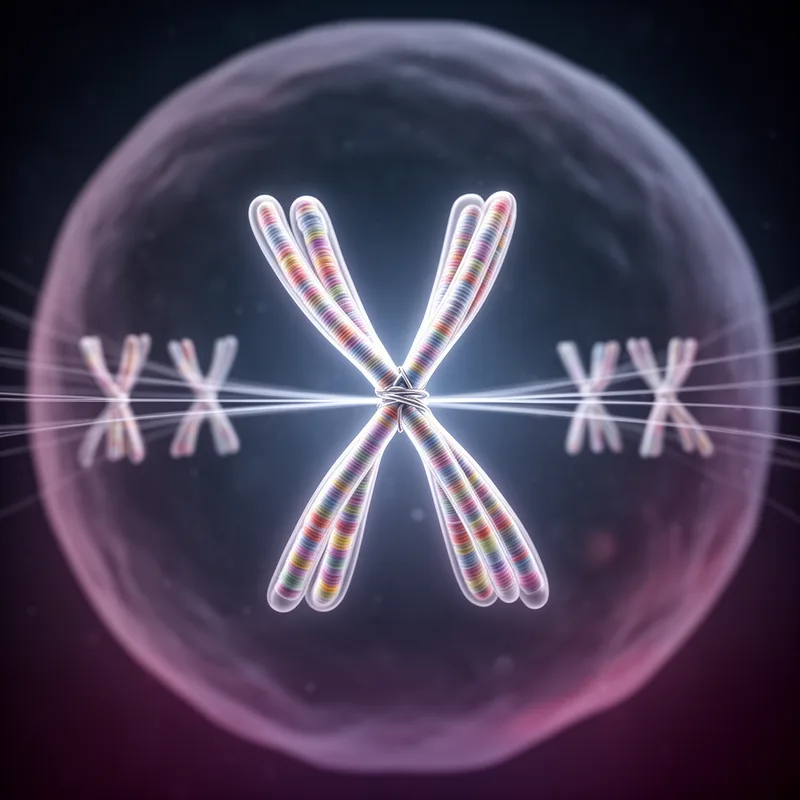
A pair of matching chromosomes joined together during the first division of meiosis
- noun
- /ˈbaɪvəˌlɛnt/
- Specialized
:
bivalente
- In the first division of meiosis, each bivalent consists of two homologous chromosomes that have paired together.
- form a bivalent
Examples
-
Kohli 23 (1) Quadrivalent HPV (2) Bivalent HPV.
Academic text (2016) -
Bivalent HPV: RCCTs Quadrivalent HPV: RCCTs
Academic text (2016) -
In an allotetraploid (Asub1Asub1Asub2Asub2), for example, two identical genomes are present (Asub1Asub2 and Asub1Asub2) whose chromosomes can now pair perfectly and form bivalents during meiosis.
Academic text (2002) -
During meiosis, the homologous chromosomes align and form a bivalent, allowing for genetic recombination.
-
The formation of bivalents is essential for the proper segregation of chromosomes during cell division.
How Many Chromosomes
multivalent
- Specialized

trivalent

 1
8.6
1
8.6
- Specialized

 1
8.6
1
8.6
bivalent
- Specialized
univalent
- Specialized
Surface Forms
Etymology
Bivalent comes from bi- 'two' and valent 'strength' or 'power', and as a noun a bivalent is a pair of matching chromosomes joined together during the first division of meiosis.