
bivalent
- adjective
- /ˈbaɪˌveɪlənt/
- Specialized
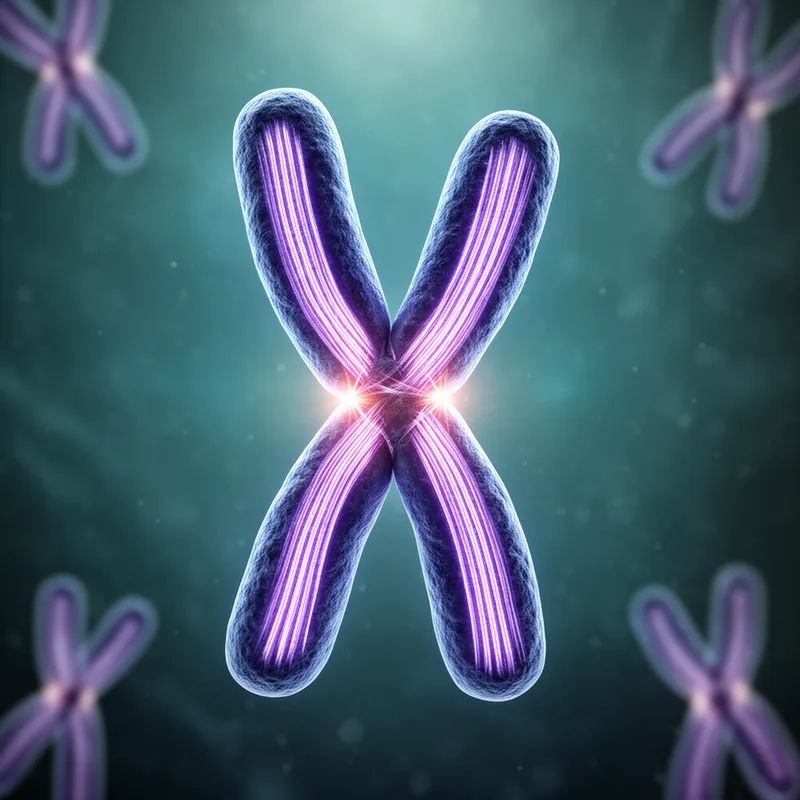
- During meiosis, homologous chromosomes become bivalent, allowing for genetic recombination.
Examples
-
The formation of bivalent pairs during meiosis enhances genetic diversity.
-
In meiosis, chromosomes that are bivalent ensure accurate segregation at cell division.
-
The vaccine, a sterile bivalent biological containing recombinant HBsAg and inactivated hepatitis A virus, provides safe and effective protection against both hepatitis A and B virus infections.
Academic text (2008)
Antonyms

- Specialized
A chromosome that does not pair with its matching chromosome during meiosis
Surface Forms
Morphology
bivalent = valent (semi-transparent) = bi + valent
The component 'bi-' (two) plus the technical adjective 'valent' yields the idea of duality, but the specific biological sense (a paired chromosome structure) is domain-specific and not immediately obvious to general learners.
Etymology
Bivalent comes from bi- 'two' and valent 'strength' or 'power', so it means 'having two of something'. In biology, a bivalent describes two matching chromosomes that are joined together during meiosis.

