
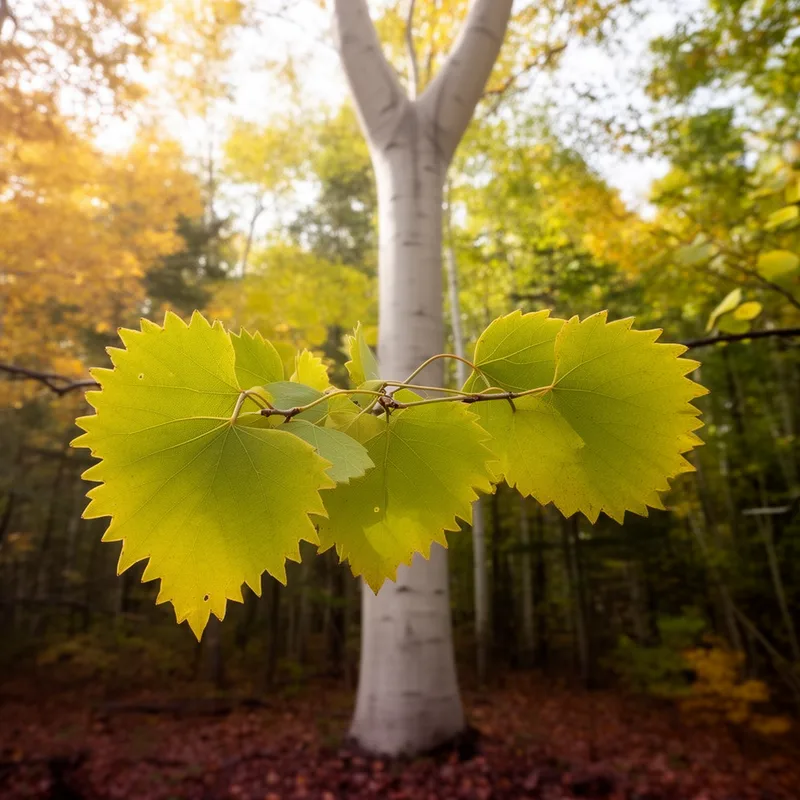
big-toothed aspen
- noun
- Specialized
- The big-toothed aspen can be identified by its distinctive leaves with large, irregular teeth.
Examples
-
In the fall, the leaves of the big-toothed aspen turn a brilliant yellow.
-
Forests in the northeastern United States often include stands of big-toothed aspen.
-
The big-toothed aspen grows well in moist soil.
-
Many big-toothed aspens can be found in the eastern forests.
-
The big-toothed aspen is commonly seen in the forests of eastern North America.
-
During spring, the big-toothed aspen produces vibrant, green leaves.
-
Ecologists study the big-toothed aspen for its role in forest ecosystems.
Synonyms

A tree with large leaves that have rough edges and a narrow top

A poplar tree with large, toothed leaves and a narrow crown
A tree from eastern North America with large leaves that have rough edges and light bark
A tree with a narrow top and large toothed leaves native to eastern North America

A tree with a narrow, graceful crown and yellow leaves in autumn
Surface Forms
Morphology
big-toothed + aspen
The phrase is a straightforward descriptive compound: 'big-toothed' describes having large/coarse teeth (here leaf serrations) and 'aspen' names the tree, so the overall meaning (an aspen with large toothed leaves) is directly derivable from the parts. This adjective+noun naming pattern is common cross-linguistically and follows regular composition, so a B1 learner who knows the constituents would understand it.
Etymology
Big-toothed aspen comes from the tree's leaves: the words big and toothed describe the large, saw-like 'teeth' along the edges of its leaves. So the name means 'an aspen with large teeth on its leaves', which helps you recognise the tree.

