
Populus grandidentata
- noun
- Specialized
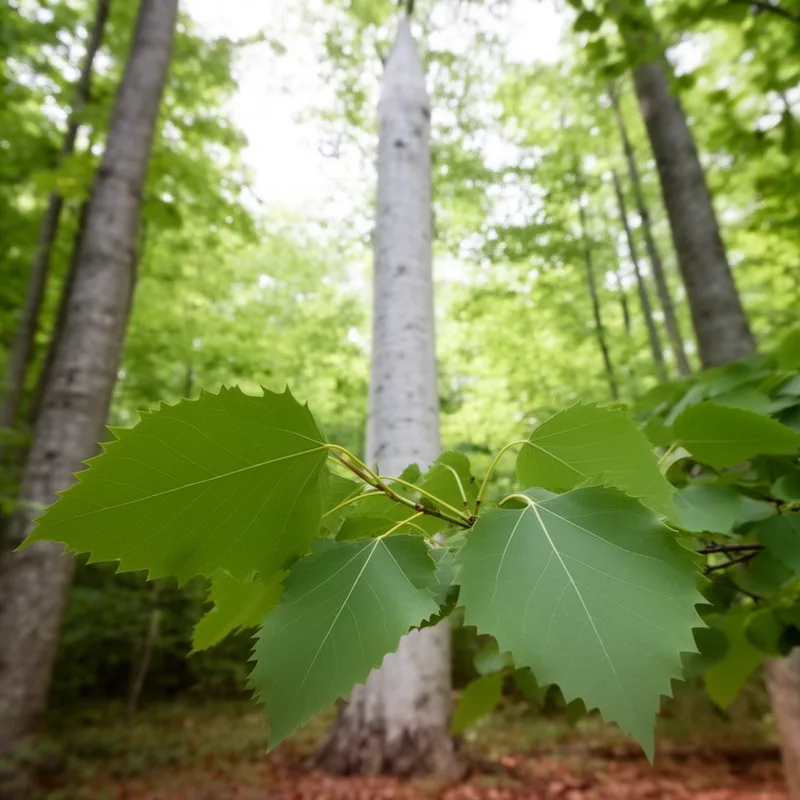
- The leaves of Populus grandidentata are easily recognized by their large teeth.
Examples
-
Forests in the northeastern United States often contain stands of Populus grandidentata.
-
The Populus grandidentata thrives in well-drained soils.
-
Conservationists are studying Populus grandidentata due to its importance for local wildlife.
-
In spring, Populus grandidentata showcases vibrant green leaves.
-
The leaves of Populus grandidentata are easily recognized by their large, toothed edges.
-
Forests in the northeastern United States often contain stands of Populus grandidentata with a narrow crown.
-
Conservationists are studying Populus grandidentata because it provides habitat for various bird species.
Synonyms

A tree with large leaves that have rough edges and a narrow top
A tree with large jagged leaves and a narrow crown that grows in eastern North America

A tree with leaves that have big teeth and a narrow top native to eastern North America

A poplar tree with large, toothed leaves and a narrow crown
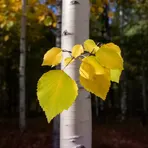
A tree from eastern North America with large leaves that have rough edges and light bark
How Broad


Surface Forms
Morphology
Populus + grandidentata
This is a Linnaean binomial composed of the genus Populus (poplars/aspens) plus an epithet that literally describes a trait ('grandidentata' = large-toothed). Even though 'grandidentata' is not in the dictionary, its Latin parts (grandi- = large, dentata = toothed) make the species meaning directly recoverable for a learner who knows the constituent elements.
Etymology
Populus grandidentata comes from two Latin words: Populus means 'poplar' and grandidentata means 'large' and 'toothed'. The name paints a picture of a poplar tree with big, toothed leaves, so it describes this species today.