

beta radiation


 1
6.3
1
6.3
- noun
- /ˈbeɪtə ˌreɪdiˈeɪʃən/
- Specialized
- For evidence of 2p decay, the experimenters took only those decays that were not associated with the emission of gamma or beta radiation.
Examples
-
Unlike alpha radiation, beta radiation can penetrate materials more easily due to its high energy.
-
Alpha radiation was helium nuclei with a charge, and beta radiation was electrons.
-
Does liquid nitrogen have a beta radiation?
Blog text (18) -
Was very, very good at ionizing gases, whereas beta radiation was not so good at ionizing gases.
-
Beta radiation, consisting of beta radiation particles, is emitted during the radioactive decay of certain nuclei.
-
During the experiment, we measured the levels of beta radiation emitted by the decaying isotopes.
Synonyms
 3
6.5
3
6.5
Rays strong enough to take electrons away from atoms
 1
7.5
1
7.5
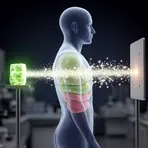
A kind of radiation made of small fast particles from radioactive atoms
 1
8.1
1
8.1
A stream of very small bits of matter, like atoms, that carries energy and can pass through things

A radioactive material sends out fast electrons during decay

A flow of very small particles from radioactive sources that can pass through matter
Surface Forms
Morphology
beta + radiation
This is partially transparent: a B1 learner who knows 'radiation' will infer that 'beta radiation' names a type of radiation because 'beta' functions as a label/modifier (similar to 'alpha' or 'gamma'). However, the specific technical sense (radiation of beta particles emitted in radioactive decay) is specialized knowledge that is not predictable from the constituents alone, so the full meaning is not accessible without subject knowledge.
Etymology
Beta radiation comes from early scientists who used Greek letters to name different rays and called the second kind beta. The word radiation means 'energy sent out', so beta radiation is the tiny, fast particles sent out when some atoms break down.