

to begin to sprout
 1
3.2
1
3.2

- phrasal verb
- Seeds need warmth and moisture before they can begin to sprout in the garden.
Examples
-
They ate the vegetation like locusts, but Delores noted that by sundown the rusty plant life had begun to sprout again in the stripped paths.
Fiction book (1998) -
In England, crops had just begun to sprout when they got eight straight weeks of rain.
-
No seed even begins to sprout.
-
Once the almonds begin to sprout, the enzymes become "active" and are then considered living.
Blog text (28) -
The town's almost abandoned downtown retail district began to sprout Hispanic shops and restaurants.
Academic text (2003) -
If left underground for more than a week past the harvest-ready state, tubers begin to sprout.
Academic text (1991) -
They begin to sprout into vines that spawn fast-budding flowers.
Fiction book (1997) -
New prickly pear infestations began to sprout from seeds previously scattered in the areas ravaged by the insects.
Academic text (1992) -
In spring, many flowers begin to sprout after the last frost melts away.
-
If the conditions are right, the beans will begin to sprout within a few days.
Synonyms
 958
2.2
958
2.2
Start to exist or slowly develop, as with an idea
 68
2.0
68
2.0
To begin to grow new shoots or leaves
 44
3.4
44
3.4
To grow and become more successful or confident
 43
3.3
43
3.3
To appear quickly in a place, often as new shops or cafes
 28
7.6
28
7.6
To grow or increase very quickly
 16
2.8
16
2.8
To begin to grow new stems or buds from a plant
 11
1.0
11
1.0
To start to grow as a new shoot on a plant
 10
4.8
10
4.8
To begin to grow from a seed or spore
 1
3.4
1
3.4
To grow and become more successful or confident
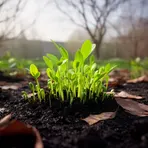
To begin to grow quickly, often as new shoots or leaves

To grow and develop in a clear, positive way
Antonyms
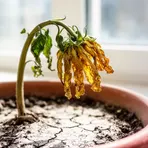
How Developed

Surface Forms
Morphology
The meaning 'to start to grow' is directly derivable from combining 'begin' (to commence) with 'sprout' (to start producing shoots); the infinitival marker 'to' is purely grammatical and adds no extra idiomatic meaning. This verb + infinitive composition is a common, cross-linguistically familiar pattern, so a B1 learner who knows the constituents would readily understand the phrase.
Etymology
Begin to sprout comes from seeds in the soil that open and send up tiny green shoots called sprouts. So, when we say an idea or plan 'begins to sprout', we mean it 'starts to grow or appear' in someone's mind.