
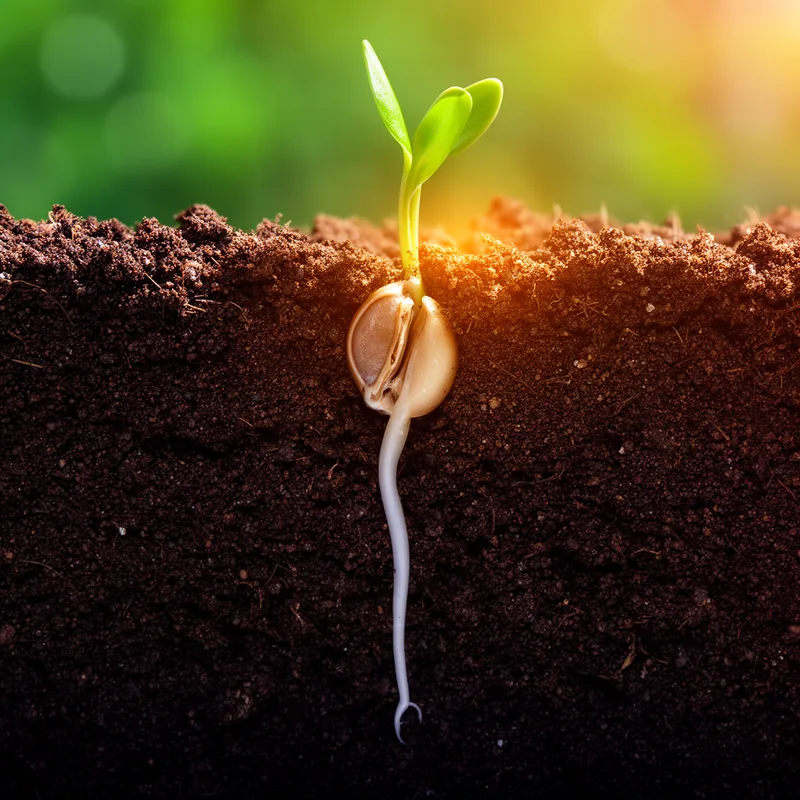
to germinate
 10
4.8
10
4.8

- verb
- /ˈdʒɜːrmɪneɪt/
- Basil is a small seed, very small in fact, and it produces sort of like a slimy coat when it germinates or sprouts.
- seeds germinate
- spores germinate
- allow seeds to germinate
Loading YouTube…
Watch on YouTubeAnd so you soak them and then once they start to generate the tail and they germinate, then you can lay them out.
- And so you soak them and then once they start to generate the tail and they germinate, then you can lay them out.
- It contains germinated black beans that provide antioxidation.
- And so if you're going and going to buy brown rice or oatmeal or oats, look for sprouted oats or germinated rice.
- I'm just finding the seeds that are germinating that I think are going to bloom and end up spreading really, really widely.
- These are slow to germinate and slow to grow.
- Basically, sprouts are seeds that you add water and they germinate and sounds very simple.
- They can get rid of all those weed seeds as they germinate, which will make your life much easier keeping them clean.
Examples
-
The seeds are placed in a greenhouse to germinate, and eventually the seedlings are planted in the field.
Academic text (2003) -
So you want to put the seeds down and then let them germinate on their own.
-
Another thing that it's used for is actually to germinate small seeds.
-
So our Evergreen tree, it says they will germinate in one to two months.
-
You pick it now, it won't germinate.
-
Basically, sprouts are seeds that you add water and they germinate and sounds very simple.
-
And then what you can do is take a cover, put it over the seeds, and then put the entire container in a nice, warm space to germinate.
-
Growers plant high-quality seed, but only half germinate and survive to harvest.
Academic text (2000) -
Two batches are watered and allowed to germinate (radish seeds germinate rapidly).
Academic text (2003) -
To grow healthy plants, it's important to let the seeds germinate in a warm environment with adequate moisture.
Synonyms
 68
2.0
68
2.0
To begin to grow new shoots or leaves
 16
2.8
16
2.8
To begin to grow new stems or buds from a plant
 11
1.0
11
1.0
To start to grow as a new shoot on a plant
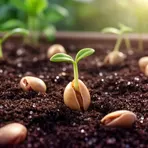 1
3.2
1
3.2
To start growing, usually of plants or seeds
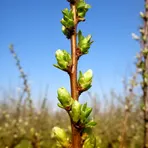
To start to grow quickly, often by forming buds
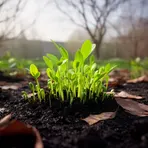
To begin to grow quickly, often as new shoots or leaves
Antonyms


How Germinated

Surface Forms
Morphology
germinate = germ (semi-transparent) = germin + ate
The verb is formed with the suffix '-ate' from the stem germin- meaning 'sprout/seed'; however, modern learners often know 'germ' primarily as a microorganism rather than 'seed/bud', so the morphological link to 'begin to grow' may not be fully obvious.
Etymology
Germinate comes from the Latin verb germinare, which means 'to sprout', and it shares the same root as the English word germ, which once meant a 'seed' or the 'beginning' of something. So, to germinate is to begin to grow, like a seed sending up its first shoot.