

barium oxide
- noun
- /ˈbɛəriəm ˈɑksaɪd/
- Specialized
- Lab technicians must handle barium oxide with care due to its toxicity.
Examples
-
Barium oxide is often used in glassmaking for its unique chemical properties.
-
When heated, barium oxide reacts readily with water to form barium hydroxide.
-
The chemist used barium oxide in the experiment.
-
Can you explain the uses of barium oxide?
-
In ceramics, barium oxide enhances the strength and durability of the final product.
-
Due to its toxicity, barium oxide must be stored in a secure and well-ventilated area.
-
The laboratory's safety manual includes guidelines for working safely with barium oxide.
Synonyms
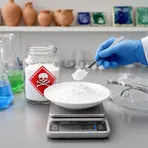
A white poisonous powder made from barium and oxygen used to make pottery and in chemical work

A white toxic powder made of barium and oxygen used in chemistry
Surface Forms
Morphology
The meaning 'an oxide of barium' is directly and literally derivable from combining 'barium' (the metallic element) with 'oxide' (a compound formed with oxygen), so a learner who knows both constituents will understand it refers to the oxide of barium. This follows regular chemical naming and noun-noun composition found across languages, making it immediately comprehensible to B1 learners.
Etymology
Barium oxide is named from the metal barium, a word from Greek meaning 'heavy', and the part oxide, which shows it is combined with oxygen. So the name literally means 'heavy metal plus oxygen', which fits its use today for the white, toxic powder used in glass and ceramics.

