
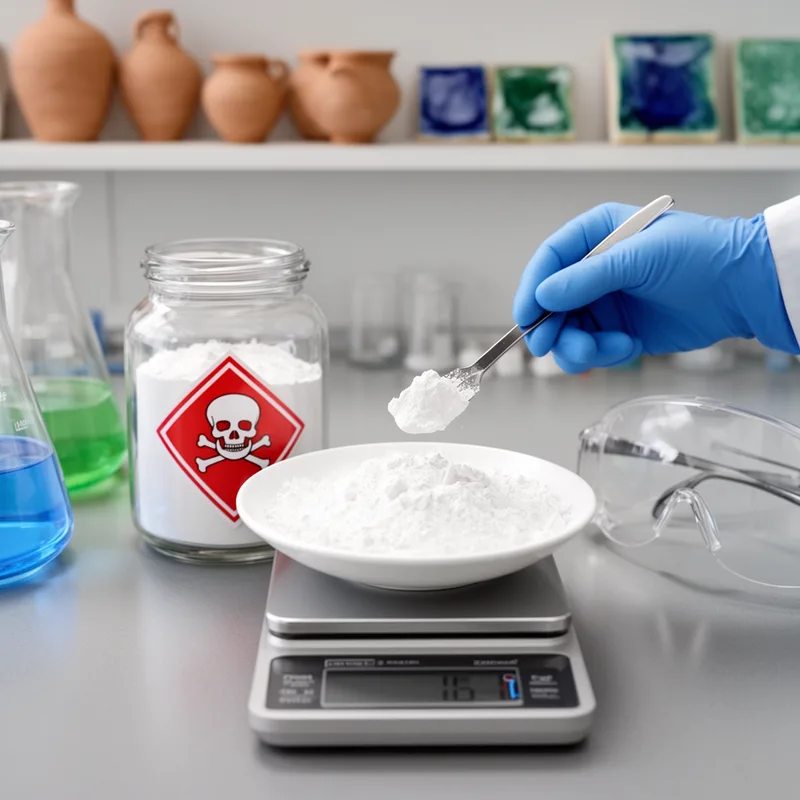
barium monoxide
- noun
- /ˈbɛəriəm mɒnˈoʊksaɪd/
- Specialized
- Exposure to barium monoxide can be hazardous without proper safety equipment.
Examples
-
When heated, barium monoxide reacts with oxygen to form barium peroxide.
-
The laboratory ordered more barium monoxide for the new series of experiments.
-
The chemist used barium monoxide in her experiment.
-
I have some barium monoxide for the ceramics project.
-
The laboratory ordered more barium monoxide to use as a chemical reagent for their experiments.
-
Since barium monoxide is toxic, it is essential to follow safety guidelines when handling it.
-
In the ceramics industry, barium monoxide is utilized to enhance the properties of the clay.
Synonyms
A white toxic powder used to make glass and ceramics and in chemistry

A white toxic powder made of barium and oxygen used in chemistry
Surface Forms
Morphology
The phrase is fully compositional: 'barium' names the element and 'monoxide' denotes a compound containing one oxygen atom, so a learner who knows those constituents can infer it is the oxide of barium. Although technical, the meaning follows standard chemical naming patterns (common across languages), making it transparent to someone who knows the component words.
Etymology
Barium monoxide simply tells you what the chemical is: the metal barium joined to one oxygen atom, because monoxide means 'one oxygen'. The metal name barium comes from a Greek word meaning 'heavy', so the name points to a heavy metal and its oxide.

