
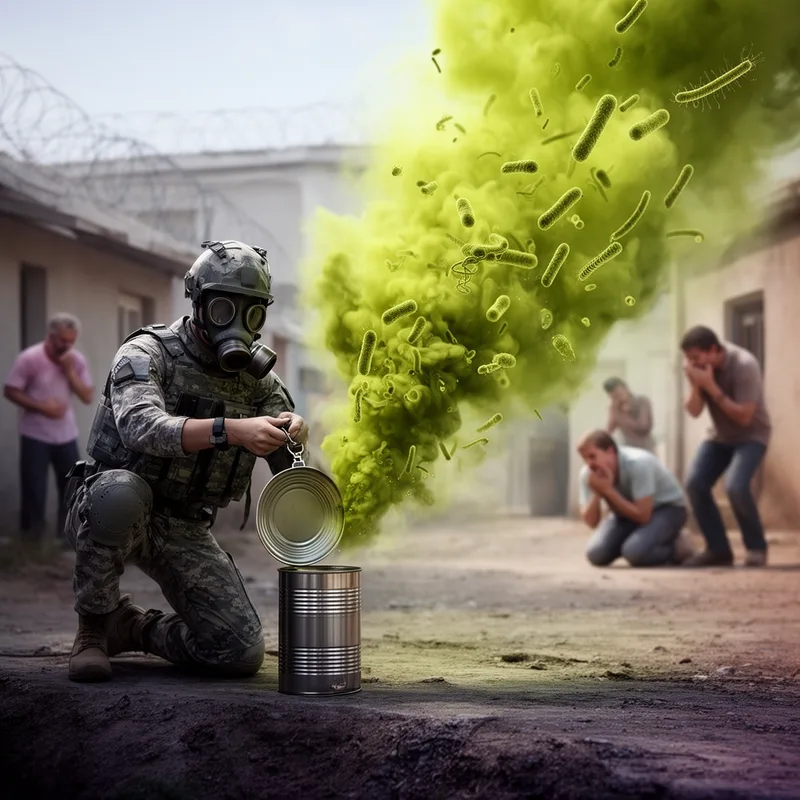
bacteriological warfare
- noun
- /bækˌtɪəriəˈlɒdʒɪkəl ˈwɔːrfeə/
- NSFW
- Scientists study the effects of bacteriological warfare to develop better defenses against biological agents used as weapons.
Examples
-
The use of bacteriological warfare raises ethical concerns about the impact on civilian populations in conflict zones.
-
Another brilliant mind in the bacteriological warfare.
-
During World War II, some nations engaged in bacteriological warfare to incapacitate enemy troops through disease.
Synonyms
 10
6.1
10
6.1

Using germs or poisons as weapons to harm people, animals and plants and contaminate food and water
 6
5.5
6
5.5
An attack using bacteria, viruses or poisons to harm people, animals and crops
 4
6.8
4
6.8
The use of bacteria or viruses to make people sick on purpose during war


 1
9.6
1
9.6
Using harmful germs and poisons to hurt people, animals, or crops

An attack using germs or poisons to harm people, animals and food supplies
An event that uses bacteria, viruses, or toxins to harm people, animals and food
Surface Forms
Morphology
The meaning is directly compositional: it denotes warfare that involves bacteria (bacteriological) and thus is predictably derived from 'bacteriological' + 'warfare'. This construction is transparent and cross-linguistically paralleled (e.g., Spanish 'guerra bacteriológica'), so a learner who knows both constituents can infer the MWE's meaning.
Etymology
The phrase bacteriological warfare comes from the idea of using bacteriological methods, meaning tiny 'germs' like bacteria, as weapons in warfare, for example by spreading infected water or food to make people sick. So the phrase means 'using bacteria to cause disease or death during war'.