

atrioventricular
 1
8.5
1
8.5

- adjective
- /ˌeɪtriəʊvɛnˈtrɪkjʊlər/
- Specialized
- The most serious complication of NLS is inflammation of the atrioventricular node leading to congenital heart block (CHB).
- atrioventricular node
- atrioventricular conduction
- atrioventricular block
Examples
-
The next point is the atrioventricular node, which sits on a fibrous substance called the septum, which separates the Atria from the ventricles.
-
The electrical signal that causes contraction moves from the atria toward the ventricles, reaching the atrioventricular node (AV node), which then delays the signal so that the ventricles can contract all at once rather than a little bit at a time.
Academic text (2012) -
On autopsy, there is no evidence of drowning, but only that the heart stopped suddenly due to an atrioventricular block.
Academic text (1994) -
We identified maternal cells in the major target organs of NLS: the heart, including the atrioventricular node, and the liver.
Academic text (2003) -
In patients who have undergone electrophysiological assessment, sinus node function and atrioventricular conduction seem to be preserved.
Academic text (2002) -
An atrioventricular block can lead to serious heart problems if not treated promptly.
-
The heart's atrioventricular node plays a crucial role in regulating the heartbeat.
-
Electrical signals travel through the atrioventricular pathways to coordinate the heart's contractions.
Synonyms
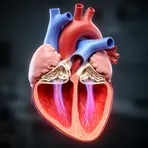
Relating to the upper and lower chambers of the heart
Compounds
- Specialized

 1
6.8
1
6.8
A heart problem when electrical signals between the upper and lower chambers are slow or stop causing fainting
- Specialized
1
7.2
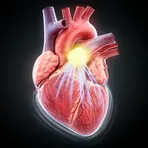
A small group of heart cells in the right upper chamber that sends signals to lower chambers to time heartbeats

- Specialized
Muscle fibers in the heart that send electrical signals from the upper heart to lower chambers so they contract

- Specialized
A heart rhythm when a small part in the lower heart makes the heartbeat instead of the normal upper part

- Specialized
A bundle of heart fibers that carries the signal from the atrioventricular node to the ventricles to make them contract
- Specialized
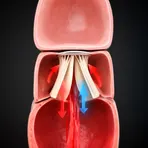
A valve between an upper and lower heart chamber that lets blood flow one way

- Specialized
A heart valve with two flaps that lets blood move from the left atrium to the left ventricle without backflow
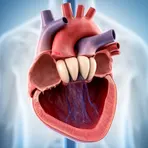
- Specialized
A valve with three flaps between the right upper and lower chambers of the heart that stops blood flowing backward
Surface Forms
Morphology
atrioventricular = ventricular (semi-transparent) = atrio + ventricul + ar
The structure atrio- + ventricular is clear in medical terms, but the combining form 'atrio-' and technical nature reduce immediate accessibility for general learners.
Etymology
The word atrioventricular comes from two Latin parts: atri- meaning 'atrium' or 'upper chamber' and ventriculus meaning 'little belly' for the heart's lower chamber. So atrioventricular means 'relating to both the heart's upper and lower chambers'.