

right atrioventricular valve
- noun
- /raɪt ˌeɪtriəʊvɛnˈtrɪkjʊlər vælv/
- Specialized
- The right atrioventricular valve prevents blood from flowing back into the right atrium during ventricular contraction.
Examples
-
Doctors often examine the right atrioventricular valve during an echocardiogram.
-
During heart surgery, the surgeon carefully examined the patient's right atrioventricular valve.
-
Damage to the right atrioventricular valve can lead to problems with blood circulation in the heart.
-
The right atrioventricular valve controls blood flow in the heart.
-
Damage to the right atrioventricular valve can lead to problems with blood circulation in the heart.
-
During heart surgery, the surgeon carefully examined the patient's right atrioventricular valve.
-
The right atrioventricular valve prevents blood from flowing back into the right atrium during ventricular contraction.
Synonyms

 2
3.5
2
3.5

A flap in the heart that lets blood flow one way and stops it flowing back
 1
4.8
1
4.8
The part of the heart with three flaps that stops blood flowing back into the right upper chamber
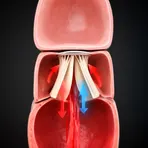
A valve between an upper and lower heart chamber that lets blood flow one way

A valve in the heart that makes blood flow one way between chambers and major vessels
Surface Forms
Morphology
right + atrioventricular + valve
The phrase is fully compositional: 'right' marks the side, 'atrioventricular' specifies a relation involving atrium and ventricle, and 'valve' denotes a flow-control structure, so the basic location and function are directly derivable from the parts. While detailed anatomical specifics (e.g., number of cusps) are specialist knowledge, a learner who knows the constituent words will understand the general meaning and role of this valve.
Etymology
Right atrioventricular valve names a one-way flap on the right side of the heart: atrioventricular means between the 'atrium' and the 'ventricle', and valve is like a door that opens and closes. So this valve lets blood move from the right 'atrium' to the right 'ventricle' and stops it from flowing back.