
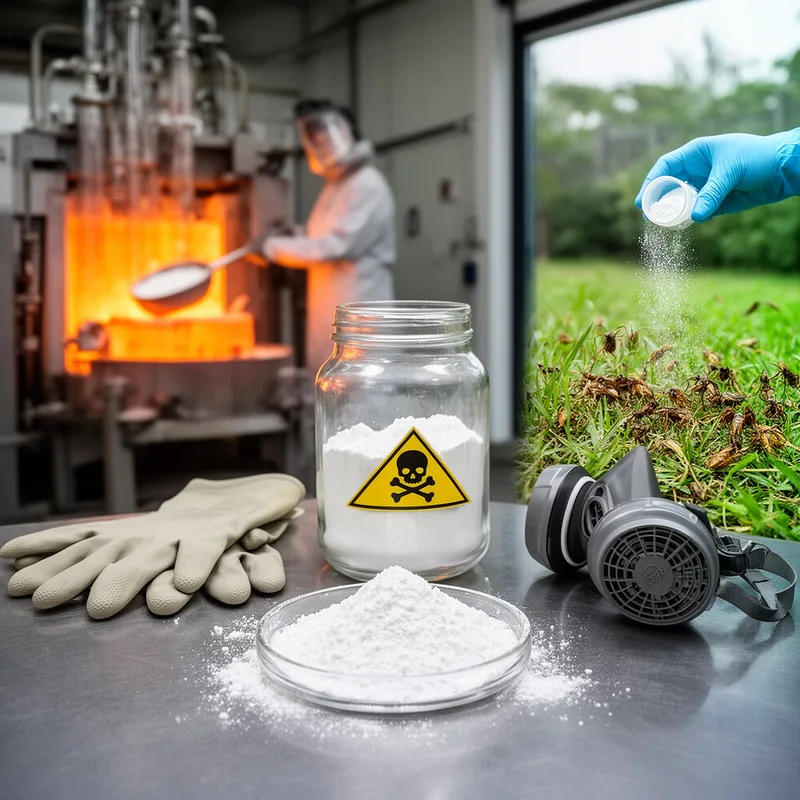
arsenous oxide
- noun
- /ˈɑːrsənəs ˈaɪkaɪd/
- Specialized
- Glass manufacturers once used arsenous oxide to decolorize glass during production.
Examples
-
Exposure to arsenous oxide can pose serious health risks if safety precautions are not followed.
-
Many pesticides contain arsenous oxide as an active ingredient.
-
Laboratory tests revealed the presence of arsenous oxide in the contaminated water sample.
-
The factory produces arsenous oxide for use in glass manufacturing.
-
Many pesticides contain arsenous oxide as an active ingredient.
-
Glass manufacturers once used arsenous oxide to decolorize glass during production.
-
Laboratory tests revealed the presence of arsenous oxide in the contaminated water sample.
Synonyms

 6
6.6
6
6.6

A white poisonous powder used as rat poison and to make glass


 1
9.3
1
9.3
A poisonous white powder used to kill pests and make glass
A white poisonous powder used to make glass and kill pests

A white poisonous powder used in glass making and in products that kill pests

A poisonous substance for killing rats, often made from arsenic trioxide
Surface Forms
Morphology
arsenous + oxide
The noun is compositionally formed from 'arsenous' (derived from arsenic, i.e. related to or containing arsenic) and 'oxide' (a compound formed with oxygen), so its sense 'an oxide of arsenic (As2O3)' is directly derivable. It is a technical term but follows regular morphological and semantic composition, so a learner who knows the constituent meanings can infer the MWE.
Etymology
Arsenous oxide gets its name from two parts: arsenous from the word 'arsenic', a very poisonous metal, and oxide meaning 'combined with oxygen'. So it literally means arsenic joined with oxygen, and that is why the name refers to the toxic white powder once used in glassmaking and as a pesticide.