
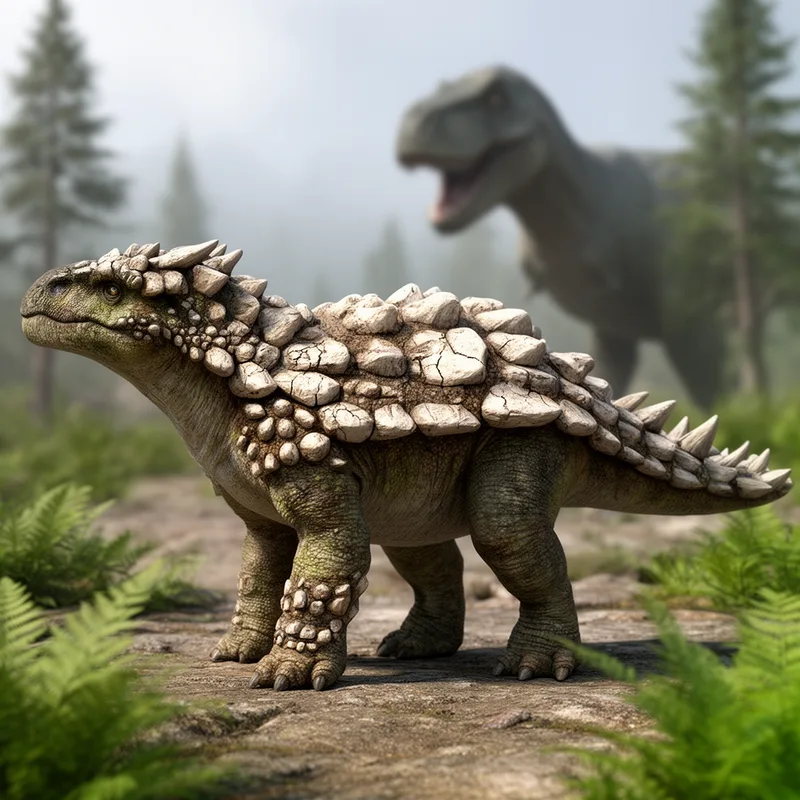
armored dinosaur
- noun
- /ˈɑrmərd ˈdaɪnəsɔr/
- US
 :
dinosaurio acorazado
:
dinosaurio acorazado
- The Ankylosaurus is an example of an armored dinosaur with bony plates covering its back.
Examples
-
Ankylosaurus is usually regarded as the archetypal armored dinosaur.
Blog text (2) -
That's a good one, but the Ankylosaurus was an armored dinosaur.
-
This is one of the largest armored dinosaurs, known by paleontologists - (BELLOWS) - as a living tank.
-
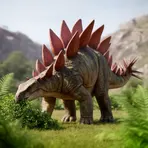
Paleontologists believe that the armored dinosaur Stegosaurus had distinct plates that helped regulate its body temperature.
-
Scientists discovered fossils of an armored dinosaur that date back to the late Jurassic period.
Synonyms

 390
3.0
390
3.0

A large extinct animal from long ago, like T. rex
 1
9.9
1
9.9
A large plant-eating dinosaur with heavy armor and a club-like tail to defend itself

 1
9.5
1
9.5
A large plant-eating dinosaur with upright bony plates along its back and a spiked tail
 1
8.2
1
8.2
A large dinosaur that ate plants with plates on its back and spikes on its tail
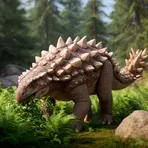
A plant-eating dinosaur with body armor like stegosaurs and ankylosaurs
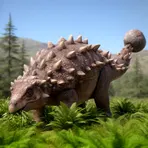
A large plant-eating dinosaur with heavy armor and a clubbed tail

A large armored dinosaur with spikes that lived many millions of years ago
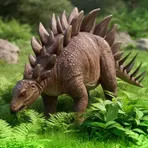
A dinosaur that eats plants and has bony back plates or spikes
How Armored

Surface Forms
Morphology
The meaning 'a dinosaur with bony armor plates or protective covering' is directly and transparently derived from combining the adjective 'armored' (possessing protective plates or a shell) with the noun 'dinosaur'. This simple adjective+noun composition follows standard, cross-linguistically common patterns, so a B1 learner who knows both constituents will readily infer the MWE meaning.
Etymology
Armored dinosaur paints a picture of a dinosaur wearing natural armored plates or bony shields along its back, like a knight in armor. Those plates acted like shields to 'protect' the animal from attackers, so the name means a dinosaur with heavy body armor.