
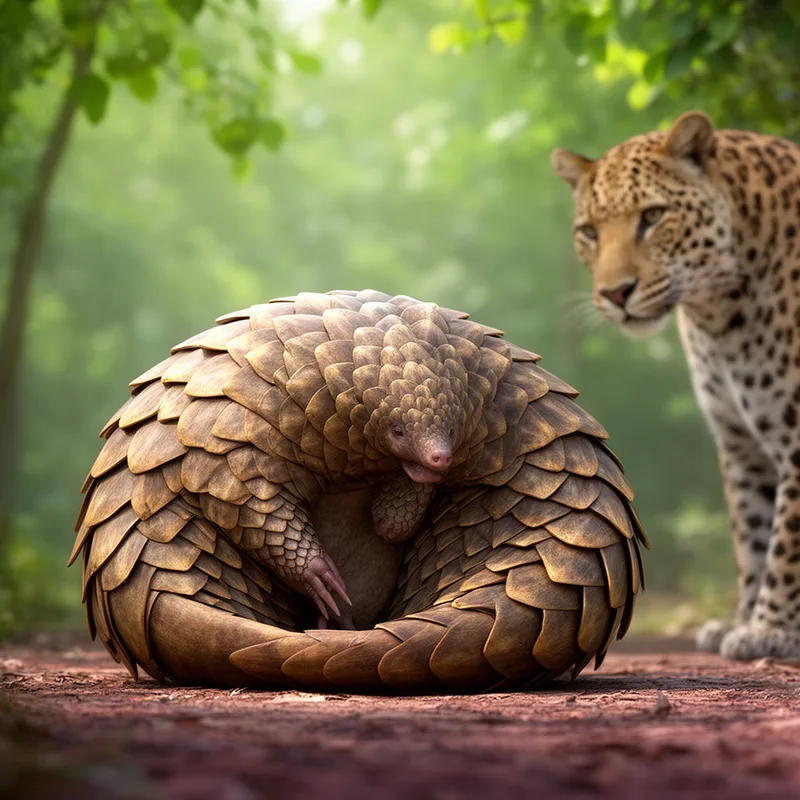
armored
 5
4.4
5
4.4

- adjective
- /ˈɑrmərd/
- US
- The armored glyptodonts, extinct relatives of armadillos, were among the most unusual mammals ever to evolve.
- armored knight
- armored creature
- armored bear
Examples
-
Crocodiles look like armored insensitive tanks.
-
Some fish, like the pufferfish, have evolved to become armored, making them more difficult for predators to eat.
-
The great strain of moving their armored bodies, no longer supported by water, made breathing difficult.
Academic text (1995) -
Well, some dragonflies have armored skin.
-
That's a good one, but the Ankylosaurus was an armored dinosaur.
-
Light from paper lanterns gleamed on their recoilless cannons and dark armored carapaces.
Fiction book (2000) -
Walking through Mahaneh Yehuda, Elias Amarillo sees armored plates being riveted to the front of a bus.
Fiction book (1993) -
The armadillo is an armored animal, covered in tough scales that protect it from predators.
-
The turtle slowly crawled across the sand, its armored shell providing a safe haven from potential threats.
Synonyms
 13
6.7
13
6.7
Covered with a thin layer of metal
 2
5.3
2
5.3
A vehicle or object with thick metal on the outside to protect against attack


 1
1.9
1
1.9
Having a hard outer covering like a crab or nut
 1
4.1
1
4.1
Covered with metal plates for strength and protection
 1
7.2
1
7.2
Covered with heavy metal plates for protection

A body covered in hard plates made of bone for protection
An animal with a hard outer layer of bone that protects its body

Covered by a protective layer or case
Antonyms

Compounds


- Specialized
22
3.4
A vehicle with heavy metal protection that keeps people safe from attack, like a tank or police van

- Specialized
14
5.3
A military vehicle with metal protection that carries soldiers safely

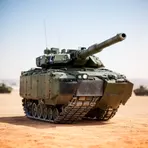
- Specialized
A heavy military machine like a tank with heavy metal plates, tracks, and a large gun for fighting
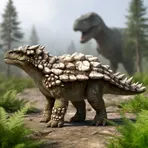

- Specialized
A small insect with a hard wax covering that sticks to leaves and stems

- Specialized
A fish with bony plates and chin whiskers that lives near the continental slope

- Specialized
A fish that has bony plates on its sides and chin whiskers for finding food on the sea floor
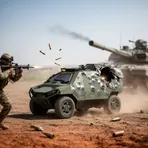
- Specialized
With thin armor that protects against small weapons but not heavy ones
How Armored

Surface Forms
Morphology
Etymology
Armored comes from the same root armor, which is about 'protection', and people use it for animals that have natural protective coverings. That's why an armored animal, like an armadillo or pangolin, has hard plates, scales, or a shell to defend itself.