
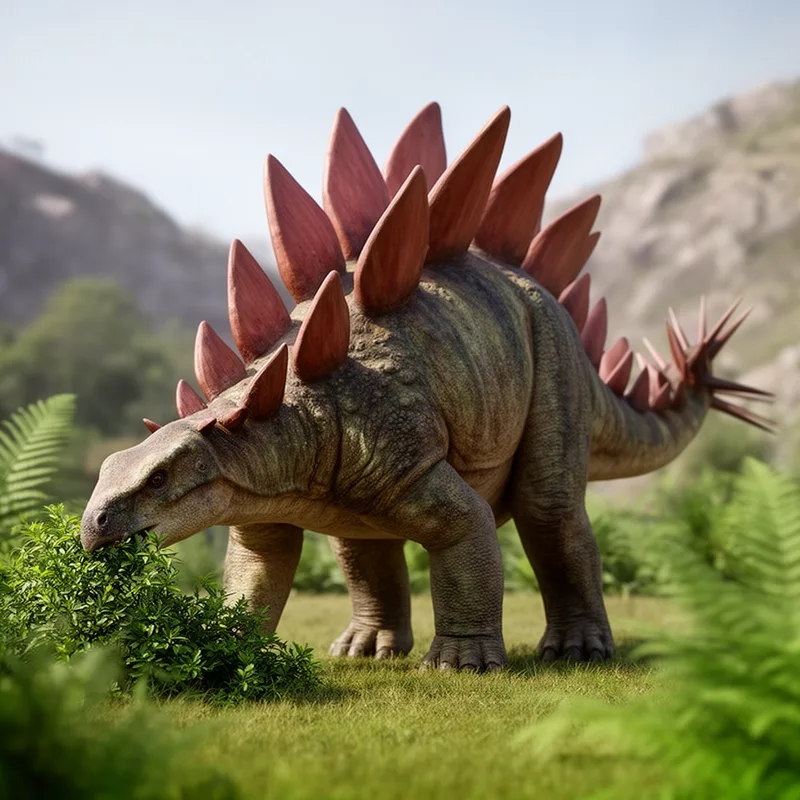
stegosaur


 1
9.5
1
9.5
- noun
- /ˈstɛɡəˌsɔr/
- Specialized
- The stegosaur is known for its distinctive bony plates that run along its back.
- a gray stegosaur
- a red stegosaur
Examples
-
"The stegosaurs are a mid-Jurassic animal, evolving about a hundred and seventy million years ago," the recording said.
Fiction book (1990) -
They walked toward the tiny head of the animal, where Grant and the vet were on their knees, peering into the stegosaur's mouth.
Fiction book (1990) -
This stegosaur is a hundred million years old.
Fiction book (1990) -
In any case, she had never smelled a stegosaur before.
Fiction book (1990) -
"We move on now to see the last of our great prehistoric animals, the stegosaurs," the recorded voice said.
Fiction book (1990) -
There was no question: the stegosaur's pupil was dilated and did not contract when light shone on it.
Fiction book (1990) -
"You have pupillary effects from the tranquilizer?" she said, shining the light in the stegosaur's eye.
Fiction book (1990) -
Ellie had already noticed the stegosaur had a peculiar odor, like rotting fish.
Fiction book (1990) -
The great leathery plates along the stegosaur's spine drooped slightly.
Fiction book (1990) -
The two gray stegosaurs, Agnes and Sluggo, went through a ritual that resembled a push-up: hind legs first, then forelegs up slowly with a sliding sort of motion.
Fiction book (2002)
Synonyms
 1
8.2
1
8.2
A large dinosaur that ate plants with plates on its back and spikes on its tail
A large plant-eating dinosaur with upright plates on its back and a spiked tail
A dinosaur that eats plants and has bony back plates or spikes
How Armored

Surface Forms
Morphology
stegosaur = stego + saur
Formed from Greek combining forms ('stego-' + '-saur') that are not standalone English words, so an average learner cannot derive the meaning from familiar English base words.
Etymology
The word stegosaur comes from two Greek parts: stego- meaning 'roof' and -saur meaning 'lizard', the same -saur you see in dinosaur. Its bony plates stand up along the back like a 'roof', so the name is like calling it a 'roof-lizard' and helps explain its plated look.